07 Aurelia and Intertexts

Updated: 8 hours ago
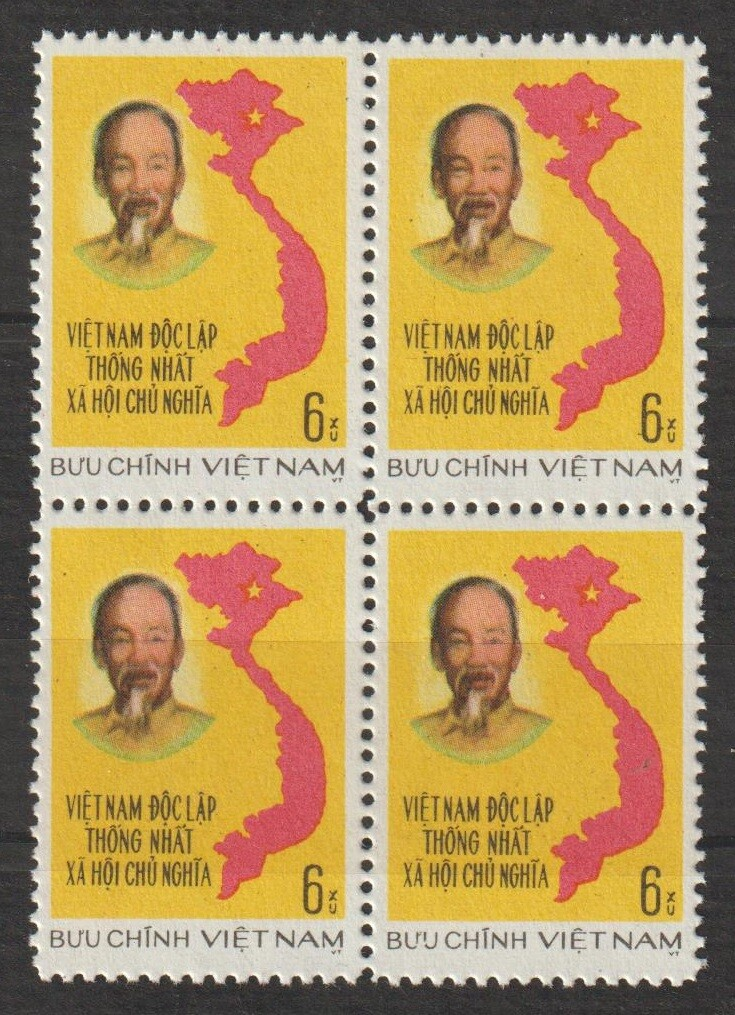
Vietnam was unified on July 2, 1976, with the establishment of the Socialist Republic of Vietnam. Because one digressio leads to another, I want to note one of Aurelia’s stranger internal crossings. Although completed in 1976, the novel already contains the Vietnam argument that Lafferty later makes explicit in Part IV of In a Green Tree, “Incidents of Travel in Flatland.” It is an instance of Lafferty allegorizing history from within the postfiguration machinery of the novel itself. He does something similar with his old “Mud Violet” ideas, when he writes about the River Boat people, the throat pulling, and the polter knocking that haunts Julio Cordovan, whom he calls, in one of his many nonce terms for the schizo-gash, a split-wit. The book is filled with small esoteric touches like these.
If I am right, Aurelia is a postfigural Catholic novel whose coherence is hidden in Scripture, Farrell’s Thomism, Lafferty’s own corpus, his political imagination circa 1976, and the symbolic machinery and narrative techniques he had spent decades building, with counterfiguration explaining Cousin Clootie. That is why the novel can feel incoherent when it is not. Its order is not chiefly the order of the surface plot, though recognizing patterns is significant. One should see that the succession of characters who question Aurelia are postfiguration of the interrogators of the child Christ in the temple and so on. The book is theological, symbolic, and intertextual.
Martin Crookall is probably representative of most smart readers’ experience of Aurelia. He writes, “Every corner contains things and there are more corners than any normal geometry allows. It’s not one of the major Lafferty novels, and like all of them it leaves you shaking your head and wondering, just what was that I just read? Think about it. You can spend a lifetime asking yourself, just what was that anyway?”
I don’t know his standard for a major Lafferty novel, and I don’t think many people even have a well-formed one. This readerly experience of overwhelmingly filled-corners should not be mistaken for incoherence. It isn’t a long book. We can look at it piece-by-piece. It is just that Aurelia is coherent, though not chiefly at the level of plot. Its coherence is theological, symbolic, and intertextual, again. To read well, one starts at the upper left-hand corner and works to the end, and then one does it again, as my favorite critic once said.
To take the novel apart concretely, rather than merely retelling its plot or extracting its Thomistic layer, one needs conceptual tools: Scripture, typology, Farrell’s popular Thomism, Lafferty’s draft history, his symbolic economies, and his habits of allusion. For most readers, that labor will not be worth the trouble. But an annotated edition could make Aurelia far more intelligible than it is now. I made one but can’t share it because of copyright.
Without such help, the novel can look like this: space girl crashes on a planet; strange things happen; the whole thing seems somehow Christian; and near the end she delivers a set of introductory-level Thomistic homilies. It is often funny. That is not wrong, exactly, but it misses most of what makes the book cohere.
Anyone who wants to answer Crookall’s question—“Just what was that, anyway?”—cannot think about the book from a distance. One has to enter the Lafferty thicket. Aurelia will always be a book for a very small company of readers. For that company, it is a gift. A work of wounded wisdom.
One last digression. When a Lafferty reader thinks of butterflies, the story that probably comes to mind is “Eurema’s Dam.” But Lafferty’s greatest butterfly is Aurelia. As he surely knew, aurelia is an old word for a butterfly’s chrysalis, from the Latin aureus, meaning golden, because some chrysalises have a metallic gold sheen. From the same root came aurelian, an archaic term for someone who studies or collects butterflies, what we would now call a lepidopterist. It is also a name associated with the first Christians, found on Roman tombs.
Thinking aloud about Aurelia could go on indefinitely. I will close this sequence in the next post with a few close readings of incidents that seem especially important for judging the novel as a story. To do that, I’ll refine the idea of postfiguration by showing how it relies on metalepsis (transumption).