"One at a Time" (1963/1968)

Updated: 10 hours ago
It has been bedlam around here. One of my great enthusiasms is cooking, so I usually handle most of the Thanksgiving preparation. Then, this morning, my son had surgery, which is always tricky. He is non-verbal and profoundly autistic, so even a routine visit to the doctor comes with its own set of challenges, and there are many such visits.
Still, I found a little time to update the blog, experiment with some code, and create a few programs that have been helpful for working with Lafferty. The best of these I can’t share. It builds on Chris Merrick’s remarkable work and, I think, finally gets it right, allowing one to search across Lafferty’s thousands of characters using dates of composition and plots, which surfaces interesting patterns. Merrick did the exhaustive mapping over the years, and his work should be published. It is the best Lafferty resource.
Perhaps because of the holiday, I have also been thinking about Lafferty the American: the teller of tall tales, so often mentioned when people want to explain what he does so well.
Unfortunately, the secondary literature on tall tales is a wasteland. That may be my Southern and American bias, since the tall tale is something like mother’s milk. I have mentioned here before that I grew up on a farm with my great-grandfather, who was raised by a blind aunt who had lived through the Civil War and had her own thoughts about the Late Unpleasantness. The center of our town had a monument that still boasts that the county sent more boys to the Civil War than it had voters, and that victory does not mean the right. My great-grandfather, like most Southerners of his generation, remembered seeing his first car, bought by his uncle home from WWI with a facial injury, and had an astonishing memory for local history. And like many bookish men without much formal schooling, he devoured history and poetry, memorized it, and could recite for hours.
When I first became interested in Lafferty, I conducted a reasonably thorough survey of the secondary literature on American folklore and the tall-tale tradition. It didn’t teach me much beyond ephemeral details now lost to popular culture. Once one has a grasp of Brother Jonathan, his offspring, the art of exaggeration, Jack tales, and platitudes about American frontier character, the material gets thin—at least intellectually.
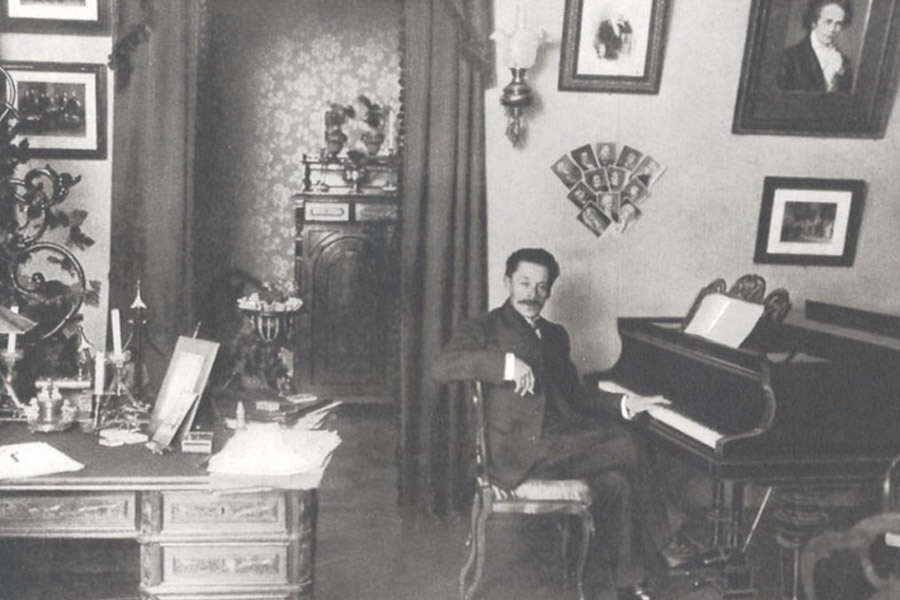
The best of what I read came down to two books. One is by a brilliant man who never quite produced a masterpiece but created some extraordinary work with help from F.D.R.’s work programs. The other is by the truly brilliant Constance Rourke (1885-1941), who died far too young after slipping on ice. Her seminal work American Humor (1931) is a book anyone interested in Lafferty ought to read. Not only is it a lock with his sensibility, but every sentence is well crafted, sentences that clearly required the reading of twenty books to land the predicate, and they ride high one after another.

Over the past year, it is her approach to the broader category of American humor, not the tall tale tradition itself (though the two are inseparable) that has made Lafferty’s style more intelligible to me as a reader. After the summary, I’ll share a few principles from Rourke that I think are especially useful in understanding how Lafferty works his magic.
Andrew Ferguson has done exceptionally strong archival work on Lafferty’s “One at a Time.” There is little hidden or obscure in the story, which places it alongside a handful of other Lafferty pieces, such as the unpublished "Thousand Dollar Melon" (1959), that do slow high talk and are particularly well-suited for thinking about how the tall-tale voice functions when stripped of the highbrow games and genre elements that typically transmogrify Lafferty’s use of the form.
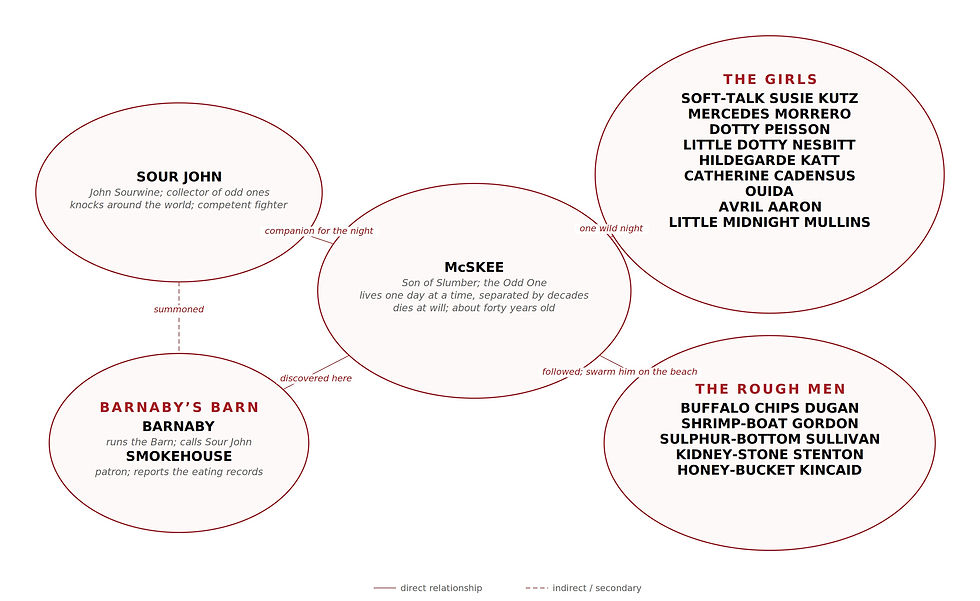
Our familiar friend, John Sourwine, appears here as a man with “the hairy ears . . . and the adder’s eyes of a true gentleman.” He is summoned to Barnaby’s Barn to witness a spectacle. The attraction is McSkee, the antithesis of the Yankee peddler from whom so many American tall-tale figures descend. Lafferty describes him as a “clear coon-dog crazy” stranger. He appears to be forty years old, but eats with the hunger of centuries. A self-proclaimed “bedamned show-off,” McSkee delights in excess and wants nothing more than to be in the roaring middle of it all.
As he devours steaks by the pile and beer by the gallon, he begins to hint at an impossible longevity. He claims to have survived drowning by waiting underwater for a century, and to have outlasted a hanging by sleeping until the rope rotted. None of this, he says, is due to rare magic. It is because he is “the commonest man you ever saw,” made of the clay and the salt of the earth.
Sourwine spends a night carousing with McSkee, which soon devolves into a “pentastomic orgy” of drinking, brawling, and singing as the two men paint the town red. Between jailbreaks and fleeing the police, McSkee lets slip that behind the simple maxim “Live your life one day at a time” lies the thunder of a hundred unspoken words. It turns out that McSkee quite literally lives a single day and then skips decades—a trick he claims savants are incapable of performing because they lack the necessary juice.
It is a parody of what the Germans call Scheintod, the death trance, or apparent death. The fear of being buried alive became a minor obsession in the Romantic imagination, with some Germans even proposing waiting cemeteries, where bodies would be laid out until the signs of putrefaction were unmistakable. It was Poe in "The Premature Burial" (1844) who created a subgenre. McSkee’s ability to “shine,” as the story calls it, is the other side of McSkee’s social excess—his parody of the odor of sanctity. Alongside proposals to create waiting cemeteries came new coffin inventions, complete with air tunnels and bell systems. Safety coffins, they were called. Better safe than sorry. Of course, being buried is one of Lafferty's always themes, from The Devil is Dead to "Posterior Analytics," "Pine Castle," and so forth.
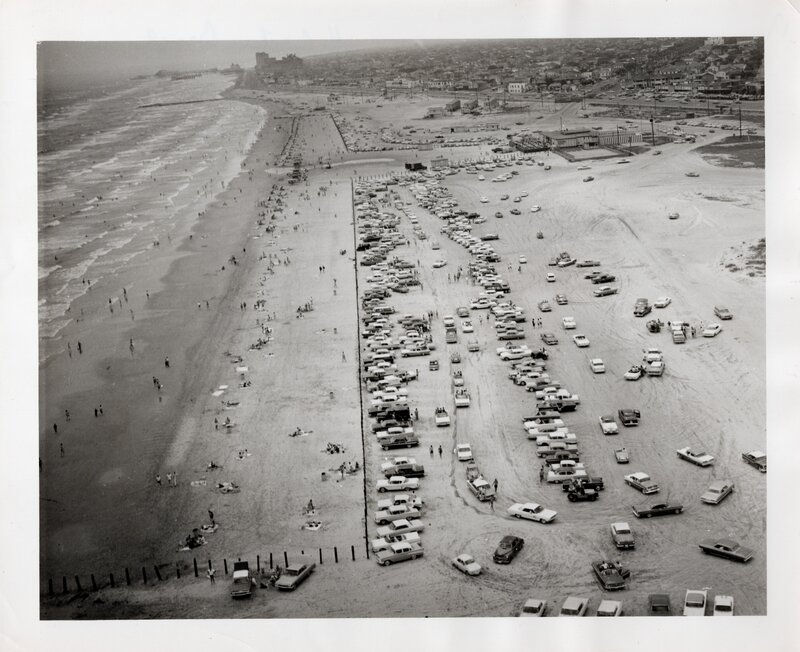
One of the funniest moments in Lafferty, in my estimation, comes straight from McSkee and, for surprise, is worthy of a W. C. Fields film. Sourwine and McSkee are hauled into a police station, and Sourwine dutifully vouches for his companion. Seconds after their release, McSkee hurls a bottle through the police station window to cap off the night. The timing is perfect, and Lafferty delivers it with a master’s touch. The two men are forced to flee again, which eventually leads them to a dark beach, where they must confront the mob of “forces of righteousness.”
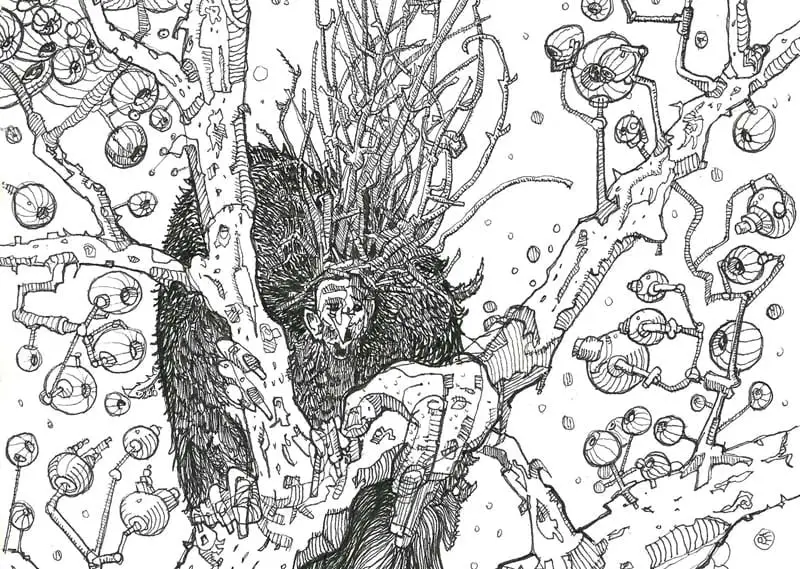
At the height of the brawl, McSkee reaches his top glory and pleasure. He decides to quit, to really shine. He gives a wild whoop of joy, holds his breath, and dies standing up, allowing the angry mob to stomp him into the sand. He instantly has the corpse stench on him. Sourwine runs away not because he is a coward, we are told, but on his own decision, and when he later returns, he finds McSkee dead, sporting a pungent shine. So John buries McSkee in a sand cliff, but he leaves a twenty-dollar bill in the corpse's pocket because the thought of being “both dead and broke at the same time is an ignominy almost past enduring."
We skip forward. Twelve years later, Sourwine finds himself destitute and in the same town. He recalls the "juicy cove" he buried and returns to the cliff to retrieve the money. When exhumed, McSkee briefly wakes—better preserved than his clothes—and lets John take the cash, but refuses to get up. He says that he has just barely died and needs another fifty years to work up a "really good appetite." Insisting that his method is not suspended animation but actual death, McSkee claims he has "no dull days.” Then he puts himself back to death, leaving John to bury the "Son of Slumber" once again.
And that brings us back to Constance Rourke, because "One at a Time" vividly embodies the principles she identified as central to traditional American humor. At the heart of her argument is the idea that American humor uses talk as a structural tool for forging social bonds out of isolation. In the disunited, often transient frontier landscapes where Lafferty’s father and uncle lived, the same places where Lafferty said he learned the art of the tall tale, speech was a fashioning instrument, a way to bind strangers into temporary communities.
"One at a Time" pitches itself into precisely that kind of void. It begins with a storied place, Barnaby’s Barn, a transitory space filled with “strangers and traveling men and seamen unknown to John.” In this space, McSkee does not simply exist; he performs his existence in the Rourkean mode, using verbal extravagance to bridge the distance between himself and Sour John. One of the more telling features of the story is how much narrative attention Lafferty devotes to Sourwine as listener—something that may well be a self-portrait, given Lafferty’s legendary reticence in one-on-one conversation.
When McSkee says, “We will talk while I eat,” he lays down the terms of a fundamental American ritual: the construction of shared reality through verbal will. He transforms a room of disconnected drifters into an audience for his incandescent high time, with the story’s other use of the word “shine” brought to the fore.
When one looks closely at the dialogue in the story, one finds something deeply Rourkean—what she identified as a dialectic between the “Western Roarer” (a principle of inflation) and the Yankee (a principle of deflation). McSkee is an American archetype, despite his origin in the distant, the Ring-Tailed Roarer. He draws on what Rourke called comic mythology and mock-pompous language to magnify and mythologize his own nature. His gluttony is a “pentastomic orgy,” and he is quick to claim a mythic lineage from “the clay and the salt of the Earth, and the humus from decayed behemoths.”
In contrast, Sour John is our Yankee counterweight, a seaman. He speaks with dry restraint, using the evasive understatement Rourke calls the masquerade of logic within the tall tale tradition. When McSkee claims to have drowned and rotted for a century, John’s response is quintessentially deflationary: “Rather a droll end to the story, or was it the end?” It is a collision between the expansive, juicy voice of the Roarer and the slow, skeptical cadence of the Yankee, and the comedic sparks fly where the two speech types strike stone.
I’ll end with one final point. One of Rourke’s most incisive observations is that the American character is fundamentally theatrical. It wears language like a costume—consciously assumed, never quite permanent. McSkee understands that verbal persona is performance. As he says, “I’m a bedamned show-off! I like everything in excess.” For him, language is not a fixed inheritance but a disposable tool suited to the immediate moment—the one-day-at-a-time joke of the story: “I can get up on a lingo in a day . . . I get contemporary real fast.” This is as clear an instance as one could want of Rourke’s theory of the generic monologue, in which the tall-tale figure is less a character with interiority than a mythic outline drawn with genius.
McSkee’s central tick, living one day at a time and then dying, is a sideshow offered to Sourwine, who is, of course, one of Lafferty’s great recurring characters. When the performance of the roaring middle is finished, the ham actor steps off stage. He refuses to continue walking in the mundane continuity that, as Rourke argued, American humor seeks to escape, precisely because of the loneliness at the heart of American frontier isolation.
With all that in mind, here is my model for identifying tall-tale moments in Lafferty that extend beyond Jack stories and mere exaggeration: