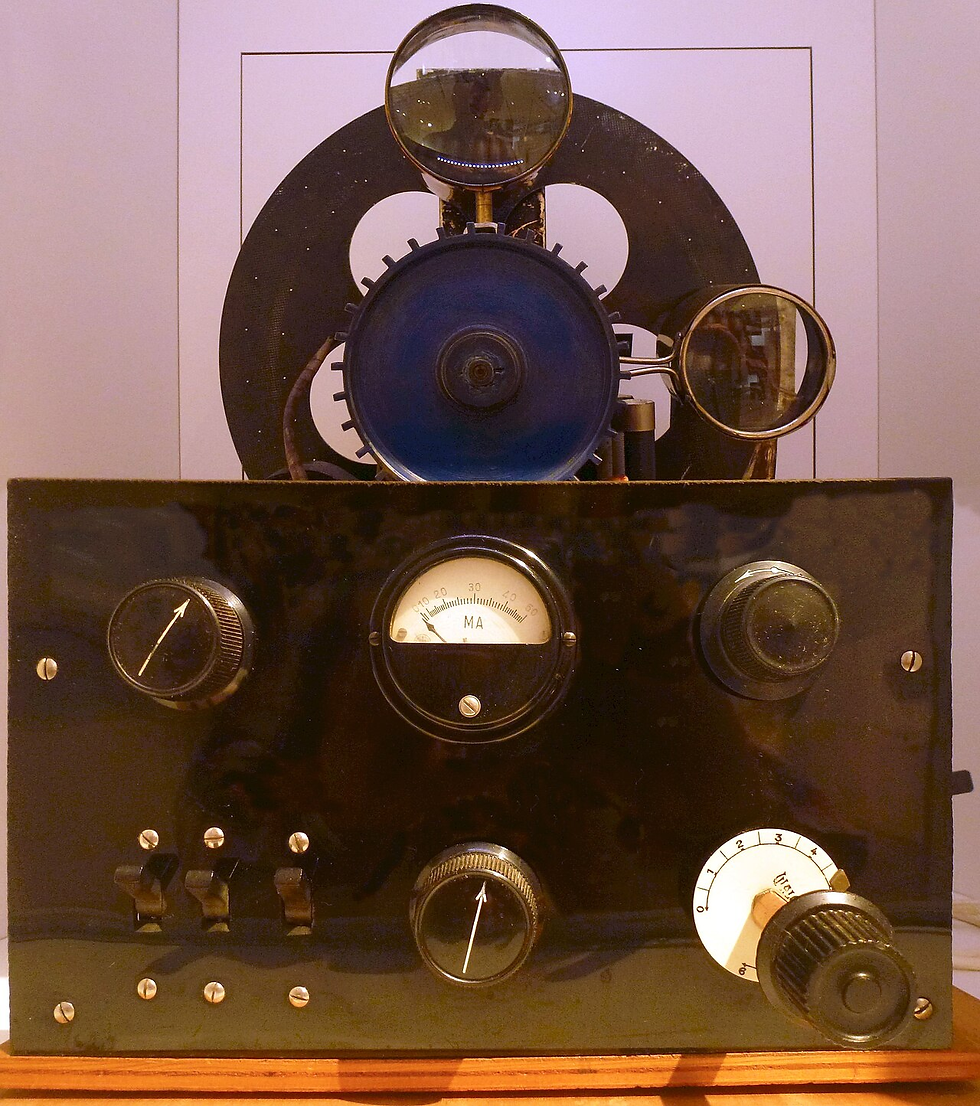
"Guesting Time" (1960/1965)

Updated: Sep 4

The only encouraging statistics I can think of is that "Believers on the average have six times as many children as atheists." — Letter
Your fertility rate is pathetic. You barely double in fifty years. Your medicine, adequate in other fields, is worse than childish in this. We find that some of the nostrums peddled to your people actually impede fertility. Well, get in the Surgeon General and a few of the boys and we'll begin to correct the situation. — "Guesting Time"
Lafferty finished “Guesting Time,” one of his classic early stories, in September 1960. A few months earlier, in May, the U.S. Food and Drug Administration had changed America forever by approving Enovid, the contraceptive pill. There may be no direct connection between the two, between Enovid and Skandia, but in hindsight they bear on the shape of Lafferty’s career. “Guesting Time” is light and funny. It dares to be silly about something that mattered deeply to him, skewers population-panic fiction, and belongs unmistakably to his early genre period. It is hard to imagine Lafferty writing a story about fertility as light as “Guesting Time” once the sexual revolution had become one of the central fronts in the culture war. He will then write stories like “Ishmael into the Barrens.”
It will surprise no one that Lafferty was pro-life. Nor is it hard to see why he would regard the sexual revolution as one sign of Flatland and amnesia, a cultural movement centered on what he regarded, to use one of his own words, as the grubby. As the 1960s went on, fears of population explosion entered public consciousness more forcefully, reaching a popular peak with Paul Ehrlich’s 1968 book The Population Bomb, which predicted worldwide famine and apocalypse. What was actually happening in America, however, was the beginning of a long-term decline in fertility. I suspect that the name of the visitors’ home planet derives from the New Testament Greek word for stumbling block, skandalon. Lafferty’s point, perhaps, is that the command of Genesis, “be fruitful and multiply,” had itself become a scandal. People had the story of fertility backwards.

In “Guesting Time,” Earth's immigration officials are baffled when people claiming to be from Skandia materialize out of nowhere at ports of entry across the country, here called the Amalgamated States. The population of these visitors geometrically multiplies. It soon reaches ten billion within two days and overwhelms the planet's physical space and resources. Ordinary people, such as the Trux family, find their homes and yards swarmed by thousands of Skandias who cheerfully construct miniature, densely packed cities (complete with multi-story housing, factories, and entertainment venues) directly on residential properties and within existing houses. It is, of course, told in a way that only Lafferty could tell it.
The Skandians themselves are friendly and polite. If there were not so many of them, they would be ideal guests. They view Earth's relatively sparse population as a tragedy and want to distribute fertility charms to the locals. People should multiply and fill the planet's empty spaces. While many everyday Earth citizens adapt to the crowded conditions and become enamored with their new neighbors, the planet's leaders view the sudden influx as a dire threat to human survival. Here, an element of conspiracy enters the story. President Bar-John of the United States and other world regents try to expel the visitors using military force before Earth's food and air supplies are completely depleted.
When Earth's armed forces open fire on the gathered crowds of Skandians, the visitors are unharmed and interpret the gunfire as celebratory pyrotechnics. Shortly after the military strike fails, the Skandias begin to vanish, explaining to the crowds that their massive presence was merely a short, preliminary visit by a token force. As they depart, leaving many Earthlings feeling surprisingly lonely and eager for their return, the Skandia leaders promise to come back the following week in much more substantial numbers. They say they will bring their children next time.
The difficulty of imagining Lafferty writing a story like “Guesting Time” after a certain point in his career has less to do with any change in his principles than with his sense of what had happened to the world around him. If one had to put a date on that change, at least on this issue, 1968 is decisive. The reaction within much of the Catholic Church to Humanae Vitae shaped the direction of his work in the 1970s and 1980s at least as much as the other aspects of Flatland did. Lafferty himself described the aftermath in apocalyptic terms:
But the Heresy broke out in its full fury after Pope Paul VI issued his encyclical letter Humanae Vitae (Of Human Life) on July 25, 1968. By one count, it was exactly half of the priests of the Oklahoma City and Tulsa Diocese who signed a frothy-with-hatred letter rejecting the encyclical. This was before any of them had even read that wonderful and holy work. They already had their Covenant of Disobedience ready when they got the advance word ‘The Pope’s answer is “No.”’ Since that time I have heard only one priest of Oklahoma defend the Magnificent Document. He’s now a feeble and nearly blind resident at Franciscan Villa at Broken Arrow.
That sense of betrayal helps explain the distance between the good-natured Skandians of “Guesting Time”—and the happier American Catholic world behind that pro-life fantasy—and the more complicated, angrier satire of later works such as Iron Tongue of Midnight, with its fetal homunculi.