"On the Joys and Trials" (1982)

Updated: 4 days ago
“On the Joys and Trials” is an unpublished speech Lafferty prepared in March 1982 for the Oklahoma Library Association Conference. It was to be delivered on April 23 of that year. The typescript, preserved at the University of Tulsa, shows his working method. He wrote, typed the text, and destroyed the scaffolding. The pages have a handful of handwritten corrections, running word counts in the margins, and a cover sheet noting the occasion.
But it is special. It is the fullest statement Lafferty ever made about his own practice as a writer. The speech runs to ten typed pages and ranges from the practical—fan-mail statistics, the economics of publishing—to the mystical, including his account of the hour that straddles dawn as “the creation hour.” Writers, Lafferty says, are fortunate because they can have that hour wherever they choose.
At the center of the speech is a claim about fiction, which makes it a sequel of sorts to Lafferty’s better-known 1979 address, “The Day After the World Ended.” Taken together with that speech, and with scattered remarks from interviews and other nonfiction, “On the Joys and Trials” would make a fine chapbook. Much of his peculiarity derives from his historical phenomenology of fiction.
The most important claim Lafferty makes here extends the argument of “The Day After the World Ended.” Prose fiction, he says, was a reflection of the structured world of Western civilization, and a reflection cannot long survive the object that casts it. Lafferty describes this historical discontinuity in the speech as he had elsewhere:
Prose fiction, which was of short duration (about three hundred years) and of limited area (the western world only), was a reflection of that structured world and it ended with it. A reflection cannot long survive the object that cast it. That we are now in a post-world or a between-world condition may be the most important fact in our non-world of today.
Readers familiar with “The Day After the World Ended” will recall that Lafferty says the structured world ended somewhere between the first decades of the 20th century and the post-World War II period. The last fully structured world spanned about three hundred years—the era of the novel. Here, he adds that it “ended so quietly that it was hardly noticed.” What we get now, what we are now reading, is not fiction but “surrogates of fiction.” To use a Lafferty image, it is as if poltergeists had animated the old houses. These houses are post-artistic art, post-fictional fiction, post-musical music, post-dramatic drama, post-factual facts, post-experiential experience, and, most significantly, a “post-conscious era.”
We still have the game called writing, Lafferty says, but we no longer have the reality that once grounded the game. It is often said that Lafferty does not write like other writers, and that is true. What is said less often is that he believed there was no alternative. Or if there was one, it was merely the option of playing the game called writing, and he had no interest in doing that.
The essay centers on Lafferty’s theory of fiction, but it also offers a good deal of practical counsel about the trade: its stages (apprentice, journeyman, master), its economics (income comparable to postmen, with packaging accounting for 95–105% of a book’s success), and its mystery (good stories either come to you or they don’t).
Yet the reflection thesis is profoundly important for understanding what he thought he was doing. If fiction has become a diminished mode, a surrogate rather than the real thing writing used to deliver, then the writer’s task is not to pretend the old game continues, but to attempt something else. Hence the one-hour rule. He implies that writing is in a bad place because writers are egoists, and there is joy to be had in it if one can keep one's ego in check:
Another of the joys of a writer is Playing Caliph. It’s too pompous a thing to call it ‘Playing God’. But it is a joy to play the Caliph or Emperor. A non-writing person can only complain "It shouldn’t be that way," but a writer can say "Then it won’t be that way. It will be this way." And the writer can make his changes stick.
The transitions are not polished, but the speech is the clearest statement Lafferty ever made about writing. It records what he thought had been lost and explains why he wrote anyway.
He ends characteristically:
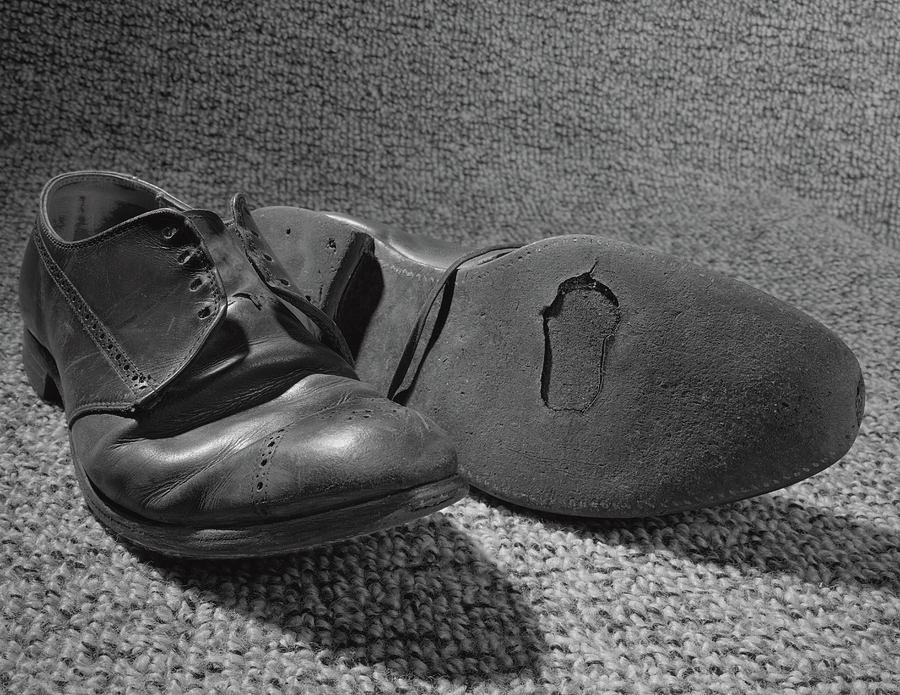
And yet I hear the corporation of scribblers living and dead speaking to the non-writing peoples everywhere with their single mind and voice of their rocky field named "writing"; "Take off your shoes! You are walking on holy ground!" Aw, just take off one shoe. It's not all that holy.


Comments