3A: Sweeny and Scriabin

About Sweeny’s work, those endless and topless mountains of music, and the rivers of words that run like waterfalls out of those mountains, is it really influencing and creating events in the world? Yes it is. And the music is much more powerful than the words in these creations.
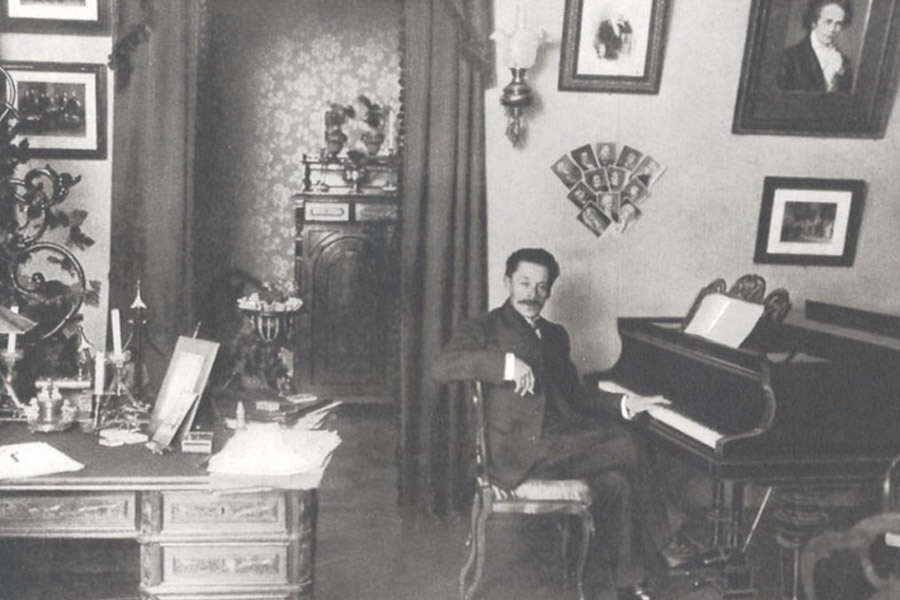
Alexandr Scriabin (1871–1915) went out in a bad way. A pimple on his upper lip developed into an infected boil. Attempts to lance it failed to stop the infection. There were no effective antibiotics available to treat it in 1915, and he died of blood poisoning.
Of all the musicians who seem at all like Enniscorthy Sweeny, the closest, I think, is Scriabin. Consider his unfinished Mysterium. It was to be an enormous synesthetic work combining music, poetry, dance, colored light, perfume, architecture, and ritual, which he planned to perform in India. No conventional concert, Mysterium was to break down the boundaries between performer and audience. The work would culminate in a collective transformation of consciousness and, in Scriabin’s most extravagant formulations, the dissolution or transfiguration of the existing world. But, again, a pimple got in the way.
The plan grew out of Scriabin’s eccentric metaphysics. Influenced by idealism, mysticism, and theosophy (though the extent of theosophy’s influence on him is debated), he developed his own philosophical system in which the ordinary distinction between mind and world was provisional. How like Enniscorthy Sweeny that is.
In Scriabin’s theory of art, creative consciousness helps produce reality. An artistic act that transforms consciousness could therefore change more than somebody’s private mental state. It could change the whole world, because consciousness and world are aspects of the same process.
Scriabin’s beliefs seem to map onto The Three Armageddons of Enniscorthy Sweeny. I would put his position this way:
At bottom, reality is spiritual and consciousness-like.
Human creative consciousness participates in reality’s becoming.
Art alters consciousness.
A sufficiently total artistic act would therefore alter the condition of reality itself.
That art would not be a representation, but a world-transforming event.
That event could bring history to its culmination and inaugurate another mode of existence.
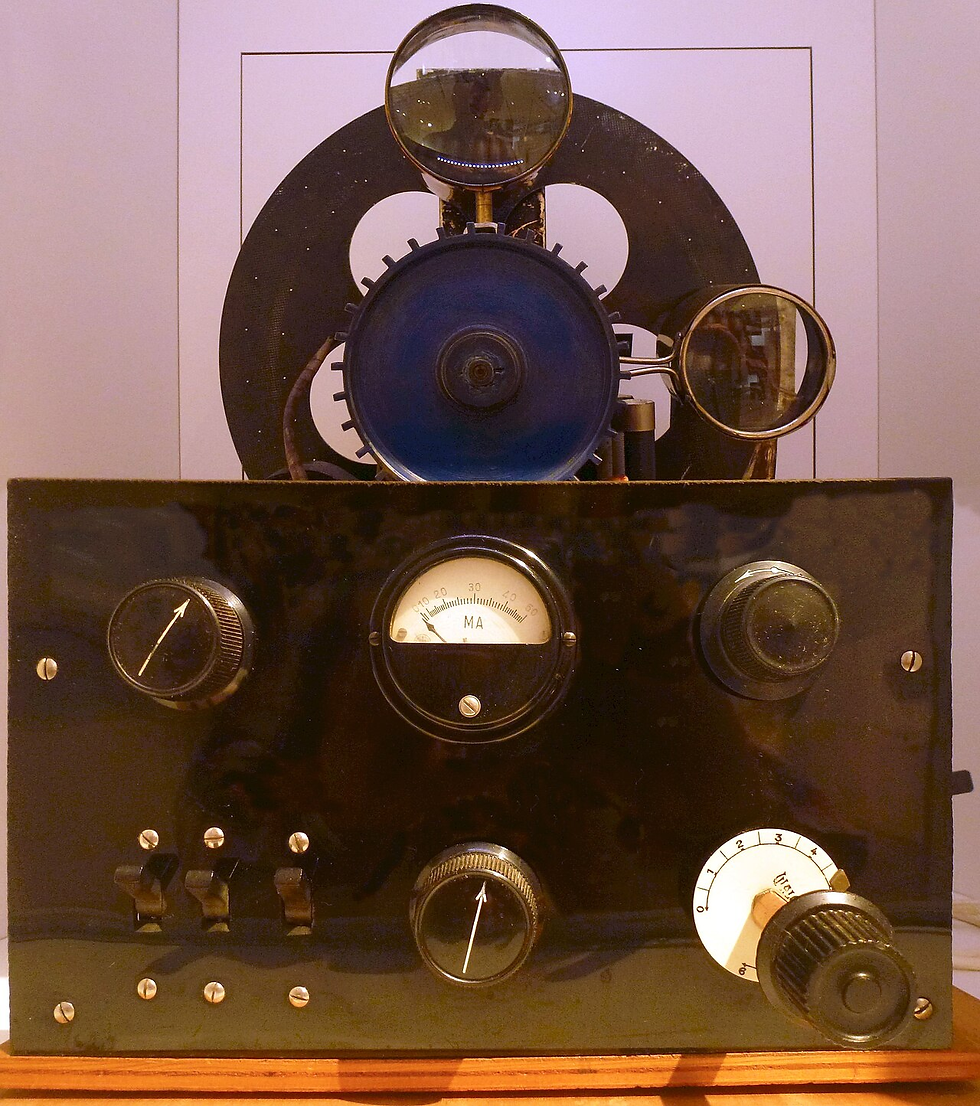
Scriabin’s late compositions make sense against this background. Prometheus: The Poem of Fire (completed in 1910), my favorite Scriabin work, includes a part for colored light. The late piano sonatas and poems increasingly use titles and performance indications suggesting ecstasy, flight, flame, luminosity, terror, eroticism, dissolution, and transfiguration. It all reminds me of Kenneth Anger, whose Crowleyan films use music and ritual as more than decorative mystical metaphors.
The projected Mysterium was the endpoint of this development. What survives of the project is mainly the text and musical sketches associated with the Prefatory Action (Acte préalable), a preparation for the final work. Alexander Nemtin later turned those sketches into a performable composition between 1970 and 1996.
Mysterium was supposed to do something to the world. It was conceived almost sacramentally or magically: art would create the state of affairs it expressed. This was part of Scriabin’s move away from Romantic “composition” toward something resembling ritual efficacy. He did not claim that a particular chord could magically cause an ordinary external event. He believed that aesthetic and spiritual action could transform reality itself. The final artwork could therefore be many things at once: artistic performance, mystical event, calling forth, and transformation of the cosmos.
In Lafferty’s terms, it could rewrite the ambient and create a new recension. Sweeny begins “On the Construction of the World” with “In Principio Erat Intellectus,” or “In the beginning was intellect,” substituting intellectus for the Gospel’s Verbum, the Word. The phrase echoes Goethe’s Im Anfang war der Sinn in Faust, a connection reinforced by Lafferty’s fluency in German and interest in the work. Here we have a version of the apex mentis in which art replaces God. A Para-Angelos even warns Sweeny that the nightmarish facsimile will not ward off a dreadful reality: “It will be the origin of that reality. It will be the invention of it.”
In Lafferty’s terms, it could rewrite the ambient and create a new recension. Sweeny begins “On the Construction of the World” with “In Principio Erat Intellectus,” or “In the beginning was intellect,” substituting intellectus for the Gospel’s Verbum, the Word. The phrase echoes Goethe’s Im Anfang war der Sinn in Faust, a connection reinforced by Lafferty’s fluency in German and interest in the work. Here we have a version of the apex mentis in which art takes the place of God.
Scriabin and Sweeny differ, however, in what they admit. Scriabin said he wanted his final work to bring about the transformation. Sweeny says he makes his operas to prevent wars and disasters. He pretends, I think, to be a reluctant Scriabin, but there is always something sinister about him and artistic ego. He relishes control over others:
Then I got out the measurements and notations that I had made from the first picture. They didn’t check with that first picture, no matter how I marked them off. The change seemed to go by quantums or jumps. There were the notations that I had remembered which showed hardly any abnormality at all; there were the present notations which were not quite as I remembered them (they had shifted slightly in the direction of wide-jawedness). There was the first picture that was not quite as I had remembered it, and it was much greater in the lower width than either the remembered notes or the present and perhaps modified notes. And there was the second picture that showed the frightful abnormality. Who had worked this change in my former friend? Myself? I suppose so. Was it real? It was real enough that it ruined him. If he had been born with such a deformity, he might have learned to live with it; but to have it come over him in just nine days when he was a grown man, he just could not adjust to that.
Sweeny knows what he is doing. His enemies warn him that his fictions will grow into facts. There is the Para-Angelos that warns him that the nightmarish facsimile will produce the dreadful reality it is supposed to prevent: “It will be the origin of that reality. It will be the invention of it.” And despite what Sweeny would have the reader believe, Lafferty’s narrator is explicit: “About Sweeny’s work, those endless and topless mountains of music, and the rivers of words that run like waterfalls out of those mountains, is it really influencing and creating events in the world? Yes it is.”
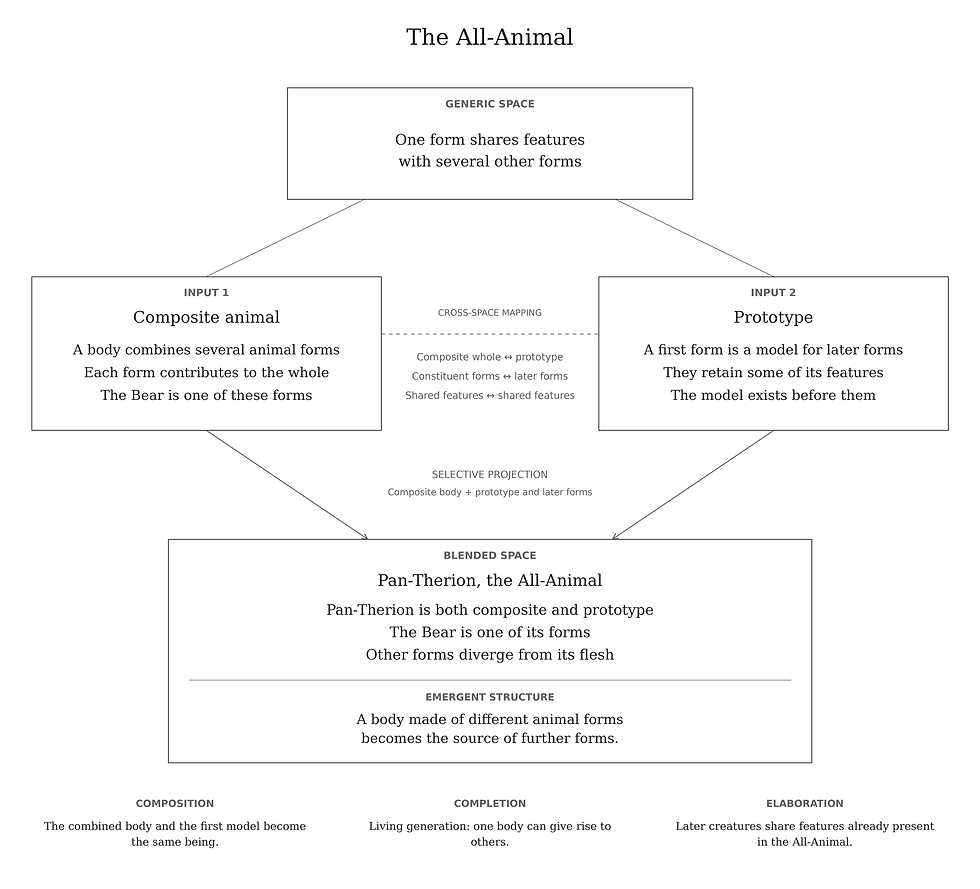
Section 4 of Three Armageddons, set to Scriabin. The Pan-Therion is Snuffles turned into nightmare fuel. Behind it stands the Surly Maker, who isn’t showing the face of the Laughing Christ this time.