1974 From the Thunder Colt's Mouth

Updated: Sep 4


Once I was crossing the Neva in a boat with my friend A., with whom, before this and later, I had many conversations on the subjects touched on in this book. We had been talking, but approaching the fortress we both fell silent, looking at the walls and probably thinking more or less the same thoughts. “There are factory chimneys too!” said A. And indeed from behind the fortress there rose brick chimneys with smoke-blackened tops. And suddenly, as he said it, I had an incredibly vivid sensation of the difference between factory chimneys and prison walls, a sensation that was like a blow or an electric shock. I sensed the difference of the very bricks. And it seemed to me that A. had the same sensation. Later, in a conversation with A., I recalled this episode, and he told me that not only then, but always he had sensed this difference and was deeply convinced of its reality. “Only positivism is convinced that a stone is a stone and nothing more,” he said. “But any uneducated woman or a child knows quite well that a stone from the wall of a church or a stone from the wall of a prison are different things.” Thus it seems to me that, in examining a given phenomenon in connection with all the chains of consequences of which it is a link, we shall find that the subjective sensation of the differences between two physically identical objects, which we often regard as mere poetic imagery, a metaphor, the reality of which we deny—is entirely real; we shall see that these objects actually are different, as different as a candle and a coin which look like identical circles, moving lines, in the two-dimensional world of plane-beings. We shall then see that objects identical as regards the material of which they consist, but different as regards their functions, are really different, and that this difference goes so deep that it even makes the seemingly identical material physically different. There are DIFFERENT STONES, DIFFERENT IRON, DIFFERENT WOOD, DIFFERENT PAPER. No chemistry will ever detect this difference. Nevertheless it exists, and there are people who feel and understand it. The mast of a ship, a gallows, a cross at the cross-roads in the steppe may be made of the same kind of wood, but in reality they are different objects made of different material. That which we see, touch, investigate are only the “circles on the plane” made by the coin and the candle. They are nothing but the shadows of real things, the essence of which lies in their function. The shadows of a sailor, a hangman and a saint may be completely identical—it is impossible to distinguish them by their shadows just as it is impossible to distinguish the wood of the mast, the gallows and the cross by chemical analysis. Nevertheless they are different men and different objects—it is only the shadows that are equal and alike. — P. D. Ouspensky, Tertium Organum: The Third Canon of Thought, A Key to the Enigmas of the World
Poor Thundercolt’s Youth will just have to take its chances. It’s a question of communicating, and that’s shot for me. All those new Splendid Gadgets of persons — are you splendid enough yourself? — they don’t understand me, and I don’t understand them. ‘What are you trying to do, warn us that we’re already here?’ one of them asked me. ‘But we know we’re already here. No, no, there’s nobody else to warn. There is no body here but us. The people are all gone.’ I never did like the people that much anyhow. But they would have understood the piece, if I had done it before they were extinguished. — Letter to Sheryl Smith.
First, the plot.
Melchisedech Duffey, Absalom Stein, and Zabotski wake to a surprise: reality is being aggressively overwritten by a new and euphoric species. Calling themselves the “Royal Pop Historians,” or the “Thunder Harps,” these self-described “splendid people” commandeer Duffey’s New Orleans art gallery and pawnshop so they can host a convention devoted to pruning away the weeds of the old world. Soon, long-standing buildings are instantaneously replaced by pristine, stylized parks, while old people and animals, upon dying, dissolve:
“Oh, the people and animals are mostly papier-mâché or rubber or styrofoam or plastic; after they break up and die, that's what's left of them. But some of them were pretty lively before the end.”
It is a full ontological collapse of the old human era.
Then comes the convention itself, where the new species explains its method for erasing human history. To them, that history is mostly a heap of malodorous fictions and psychological sicknesses. Speakers such as Cyrus Roundhead describe their metaphysical techniques, including the lifting of time-layered transparencies from stones, and use them to argue that the great sites of human civilization—Rome, Athens, the Black Sea, Jerusalem—were never real:
“We commonly lift or peel off transparencies at six-second intervals. Each such transparency will give a detailed and accurate analysis of the air for its period . . . The patinas deposited on good rock surfaces can be lifted down to the thickness of a single molecule.”
But a new timeline has to be enforced. The Royal Pops therefore lead a “safari” across the city, using “thunder axes” to butcher the remaining human “pseudopeople” and raze the old infrastructure. In place of the complex, passionate human inheritance, they install a superficial but expertly orchestrated aesthetic, emptied of empathy and depth.
The metaphysical transition culminates in the kind of eschatological spectacle Lafferty loves. At the newly manifested Decatur Street Opera House, attendees are subjected to a kinetic test at the entrance. True humans are exposed by their passion: when they pass near basins of cold human ashes, the ashes burst into flame. Those so identified are separated out for execution:
For there were ultimate tests set at the doorways, and it was known by kinetic intuition who must be tested... They were made to wash their hands in ashes, and they washed their hands in flame... They failed it in dirty flame and curling smoke.
Inside the arena, the last defiant remnants of humanity—including Zabotski, the young artist Deutero-Finnegan, and Margaret Stone—are martyred by the Thunder Colt, the newly hatched and compulsively devouring totem of the superseding race. As the people of the old recension die, Roundhead admits that his new species lacks depth and inheritance. Yet he seems oblivious to the human legacy that he and the Splendids have annihilated.
“We have the thunder dimension,” the talkative Cyrus Roundhead was saying in the loge, “but I am jealous that there may be other dimensions that we lack. Do we really miss anything by living so entirely on the surface? What we need to find for ourselves is a dimension of depth. It would be fine if some kind and older race would will such a dimension to us, but we look in vain for a source of any such inheritance.”
To get into this story, I want first to bracket almost everything about it except one of Lafferty’s important source texts and the theological patchwork he uses to demolish it.
In the early to mid-1970s, Lafferty began mining P. D. Ouspensky for ideas. The novel in which this influence is most visible is Not to Mention Camels. Apparently, Lafferty once told Robert Sirignano as much, though the exchange is not preserved in any of the Lafferty-to-Sirignano letters I have read. Ouspensky’s influence on Not to Mention Camels is oblique, often riffing on passages in the occultist’s work. At some point I’d like to explain how I think that works. But there is one Lafferty piece that is, at least on one level, an outright parody of Ouspensky, this one: From the Thunder Colt’s Mouth. It later became Chapter Eleven of More Than Melchisedech. Lafferty made a few important changes and many smaller touch-ups. Anyone who wants to understand the story needs to know something of this background.
Pyotr Demianovich Ouspensky (1878–1947) was a Russian journalist and independent philosopher with a mathematical bent. He wrote Tertium Organum in Saint Petersburg in 1912, before his famous discipleship under Gurdjieff, his later break with the guru, and his final descent into what looks very much like spiritual fraud. He first reached the English-speaking world through the Bessaraboff–Bragdon translation of Tertium Organum in 1920. By the time he died, Ouspensky was a broken alcoholic who said that none of his ideas had led anywhere. The title Tertium Organum tells us a great deal about both his ambition and his pretension. It was meant to be a “third canon of thought,” standing after Aristotle’s Organon and Bacon’s Novum Organum. Ouspensky believed he had discovered a logic not of deduction or induction, but of direct intuitive perception of the real.
There is a large amount of hogwash in the book, but I will try to give the main line of the argument fairly. Ouspensky attempts to extend human thought by combining Kant with C. H. Hinton’s speculations about higher-dimensional space. Ouspensky is a pillager of Kant who thinks that one can gain access to the “noumenal enough” by breaking down the Kantian wall of the first critique between the two formal features of the transcendental aesthetic. As in Kant, space and time are not treated as features of the world in itself, but as transcendental conditions or limitations of our receiving apparatus, though Ouspensky equivocates here. He says a non-rational animal perceives in fewer dimensions than we do, and it mistakes our solid world for surface and motion. We make a comparable error. We perceive a four-dimensional reality in three dimensions and mistake its higher extension for the flow of time. This is the crux. Correctly understood, past and future exist together in an eternal NOW, which our consciousness traverses like a traveler who supposes that the towns behind him have ceased to exist. In this scheme, both old-fashioned Kantian humility and positivism become versions of the animal condition raised into philosophy. Keep the eternal NOW in mind, because it stands at the center of Lafferty’s take down of Ouspensky. It is a comically simple version of block time.
If there is an eternal NOW, why do we not perceive it? That is Ouspensky’s guiding question, and he has an answer, dear initiate into higher mysteries. There is, he says, a potential faculty called “cosmic consciousness.” Drawing on William James’s account of mystical experience and R. M. Bucke’s evolutionary mysticism, Ouspensky argues that a higher logic is reachable, one in which the part can equal the whole (he is unaware of Russell’s Paradox), and that a new higher man will arrive, leaving ordinary humanity in the dust, one who sees time as space:
A higher race is rapidly arising from the bulk of humanity, and it is arising through its own peculiar, understanding of the world and of life. It will truly be a HIGHER RACE - and there will be no possibility of any falsification, any substitution, any usurpation.
The men of this new consciousness will constitute a superior race, already born and living among us, recognizing one another by passwords and countersigns. Their entrance into the arena will be the judgment of old humanity. This is the part of Ouspensky that matters most for Lafferty. For Ouspensky, time is simply the fourth dimension of space, imperfectly perceived. Because our Kantian receiving apparatus—the forms of intuition described in the Transcendental Aesthetic—does not grasp the higher extension of bodies all at once, that extension reaches us not as a shape we see but as a succession we undergo. “Time” becomes the sensation of consciousness moving along a spatial direction it cannot apprehend whole, as a plane-being would experience a solid passing through its world as an event rather than an object. Yes: Ouspensky does not understand Kant.

To narrow in on what Lafferty is doing, it helps to set out his parody of Ouspensky on three levels.
The first parody is metaphysical. It works by granting Ouspensky everything. The lecturer at Duffey’s teaches warmed-over Tertium Organum: “our time scale is purely conventional”; all events “are pretty much simultaneous”; there is no past, only “times and incidents that have been misplaced”; there is no future, only “a putative direction so designated by those who have really lost their directions.” This is Ouspensky’s eternal NOW, his misplaced railway station that “existed, is existing, and will exist.” Ouspensky writes:
Those who came from Moscow to St Petersburg passed through Tver. They are no longer at that station, nevertheless it exists. In the same way, a moment which corresponded to some event, already past, as, for instance, to the birth of life on earth, has not disappeared but exists. It is not outlived by the universe, but only by the earth. The place of this event in a four-dimensional universe is defined by a certain point, and this point has existed, exists and will continue to exist. At present another wanderer is passing through it . . . Time does not flow, just as space does not flow. It is we that flow, wanderers in a four-dimensional universe.
Lafferty draws a fun metaphysical inference. If nothing has ceased to happen, nothing is safely behind us, so everything can be screwed with through editing:
“These are not ghosts of the past that we track down and set right. Really, there are no ghosts . . .There are certain times and incidents that have been misplaced. But we can find them . . . If a thing is not still happening, then how will it be revised?”
A metaphysic built to guarantee the preservation of the past can become a warrant for editing it; and whatever can be edited can be obliterated. Here Lafferty’s fear of historical tampering comes into view. In the story, that fear reaches its greatest pitch when the Black Sea, Rome, Athens, and Jerusalem are removed from history. The epigraph’s question (“how can it be uncreated again?”) is crucial here. Lafferty takes it from material quoted by Ouspensky in Tertium Quid. In its original context, the line belongs to a strain of Hindu thought in which “phenomenal reality” is “destruction” because it draws the soul away from the noumenal, undifferentiated One. The phenomenal becomes real by returning to its transcendental source. Lafferty travesties this idea through the Splendid People and their thunder axes. For him, this is not the restoration of the real. It is metaphysical vandalism.
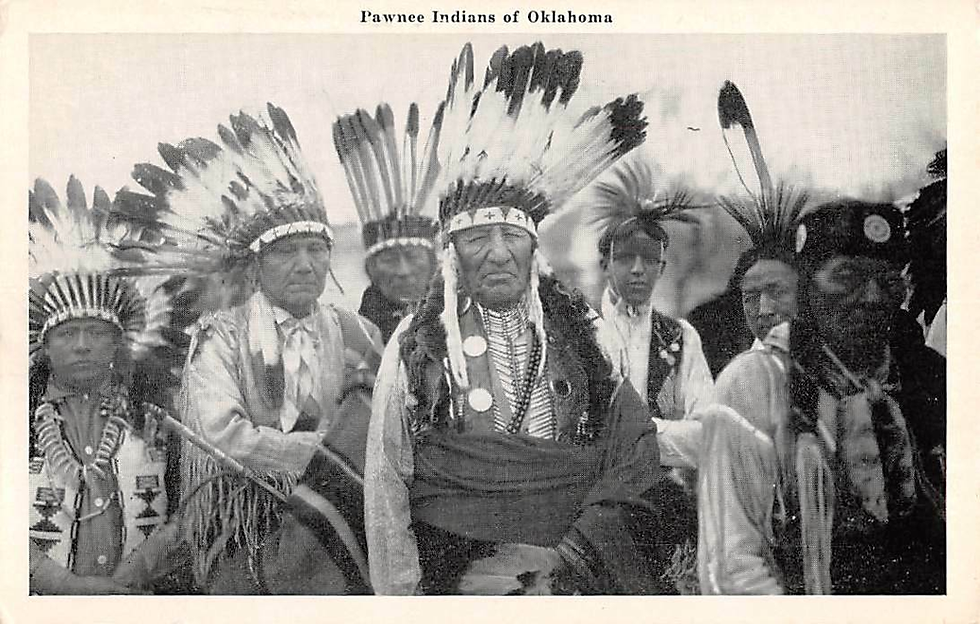
The second level of parody is anthropological. Ouspensky closes Tertium Organum by saying that “the future belongs not to man, but to superman, who is already born, and lives among us”; that among these transitional men “already are established pass-words and counter-signs”; and that the age’s great questions “may be solved by the entrance into the arena of a new race CONSCIOUS OF ITSELF which will judge the old races.” Lafferty has enormous fun with this. The Splendids have awakened “only the other day” and already possess the world. The passwords have become convention buttons: “Are You Splendid Enough?” As so often, Lafferty seizes on one word in a source text and inflates it into theater. Here the word is “arena.” In “From the Thunder Colt’s Mouth,” the anthropological drama culminates in Christians being fed to the lions. The judgment of the old races is conducted in an actual arena, with bulls, bears, the Thunder Colt Game, and the last humans thrown to the totems.
The scene was a blood-and-sand arena. The act was a bullfight . . . Each of the young persons would defy a bull and do a flying handstand on its horns. Then there would be an interval when the bull was given a human person to mangle to death. The humans were sliced and gored by the curving, whetted horns . . .
In the third aspect of parody, one sees Lafferty’s real brilliance because it condemns the superman by using Ouspensky. Tertium Organum gives two tests of the higher man, and the splendids fail both of them. Ouspensky's criterion for his two races is the "ability to create or ability only to destroy.” He says that the lower type are like apes loose with a man's tools.
Imagine a zoo full of apes. A man is working in the zoo. The apes observe his movements and try to imitate him... if the apes manage to get out of the cage and get hold of the man's tools, they may destroy all the work of this man and do a lot of harm to themselves. But they will never be able to create anything . . . Creation and destruction - or rather ability to create or ability only to destroy - are the two main signs of the two types or two races of man.
Spoilers. That is, of course, what the Splendids are. They confess that “we don’t have much detailed history of our own . . . but we can steal some of their things and their memories.” They “search vainly for a legacy of glory” and end the story under an unlegacied sky: apes with thunder axes. Ouspensky’s figure for the lower perceiver (the being who mistakes surface and animated motion for reality, who shies because “the bush has suddenly turned round”) is the horse. This is where Lafferty gets the title of the story. Ouspensky calls the condition “two-dimensionality.” Lafferty turns the scheme back on him. It is the Splendid People who are “entirely and splendidly on the surface,” living in a world of animated effigies and deflating buildings, a world that hatches its totem colt on human flesh. Ouspensky’s lowly two-dimensional horse has become Lafferty’s version of a golden calf.
Much more could be said about Lafferty’s use of Ouspensky here. He takes from him, for instance, the idea that stones contain history. But enough is now visible to show that Lafferty is not simply making things up out of whole cloth. He begins with ideas in Ouspensky—the eternal NOW, stones as recording devices, horses as two-dimensional perceivers, lower and higher men, and gives them the Lafferty treatment.
So far, the critique has been entirely negative. Lafferty’s positive position appears in the way he uses his own tradition to set out a counter-vision. For symmetry’s sake, I will break this down into three points as well.
The first thing Scripture does in the Thunder Colt texts is blow the whistle. This is another of Lafferty’s counterfeit worlds. The Splendids have built an entire identity out of stolen Scripture, though Lafferty expects the reader to notice this without being told. The psalm that mentions Melchisedech is also the psalm the Splendids plunder: Psalm 109 in the Vulgate numbering. More specifically, the phrase comes from the lines before the Melchisedech verse: in splendoribus sanctorum, “in the brightness of the saints.” Duffey half-remembers it as a phrase “used by the Lord Himself for an earlier mob,” and one sentence later the text gives us “the Splendid People.” The Splendids have stolen Duffey’s own coronation song, just as they have stolen his house.
Their harvest imagery is stolen too. All the business of weed-cutting, flesh-weeds, and “one will be taken and one will be left” travesties Matthew’s parable of the wheat and the tares. This time the cockle conducts the reaping, burns the good wheat, and lays claim to the shining that the parable’s last verse reserves for the just: “Then shall the just shine as the sun in the kingdom of their Father.” Who are these reapers of the wheat? Just who we would expect. When asked, they say their name is Legion.
“And what did you say was the name of your society?” Stein asked. “I also forget.” “Legion,” the Countess said. That was the answer to both their questions.
The second element in Lafferty’s counter-vision is an ontology of remembrance set against the metaphysics of unhappening. The Splendids’ world is one in which the unremembered “never existed.” They destroy the Black Sea because of its connection to the Argo mythos and Colchis, and this act belongs to their larger campaign of militant amnesia.
Against this, Lafferty sets the biblical conviction that nothing offered to God is finally lost. The proclamation in “the new style of writing,” whose words will not stand fast, is nailed over the Fourth Gospel (In principio erat Verbum) so that the war on verbatimness is waged directly over the Word. Duffey’s squid ink, which “will remain true” after three thousand years, becomes the scribal figure of Christ’s promise: “heaven and earth shall pass away, but my words shall not pass away.”
This pattern of iconographic insetting repeats throughout the story. The ashes at the opera doors kindle because “there was something that remembered.” This is Abel’s blood crying from the earth; it is also the Ash Wednesday memento. Zabotski, who is always a Noah figure in Lafferty, bellows once more after death, leaving the “human-stenchy” wake.
“I'll leave me a wake, you!” Zabotski roared . . . “I will strew me a path in this world and out of the door of this world! I will make me remembered!” . . . He did, however, give one more defiant bellow after he was dead, a thing that startled the spectators... But he left a stenchy wake from the smell of his burned and burst-open hands — human-stenchy.
Why is Roundhead called Roundhead? Because the Roundheads wanted to decapitate a king, and this is a story of an assault on God. The story first appeared in Roger Elwood’s anthology In the Wake of Man, and I wonder whether Lafferty knew the title before he wrote it, since he builds the idea of the wake so deeply into the text. Zabotski’s wake clearly alludes to “the human ship will be the one that left no wake,” from Wisdom 5:10, where the wicked lament that their lives passed “as a ship . . . whereof when it is gone by, the trace cannot be found.” In fact, the Book of Wisdom supplies the hidden script of the whole arena: the plot to “examine him by outrages and tortures,” the gold proved in the furnace, the wicked standing amazed that the just are “numbered among the saints.” The extermination the Splendids stage as triumph has already been judged from within Wisdom itself. Lafferty expects the reader to know these famous chapters.
Finally, there is the basic biblical furniture. Against the people without passion stand the biblical vocations: Melchisedech the priest-king, offering his comic bread and wine (here doughnuts and Green Ladies, with the promise that “somehow you will all be taken care of”) while the Roman Canon’s own high priest goes unrecognized by his guests; Mary Virginia carrying the killed child on her bosom as the story’s Pietà; and Margaret, margarita, the Pearl of Great Price, whom the barnacle-scrapers destroy. Her nightly “giving-of-testimony” is martyria. Her ordeal gathers up the Bible’s theology of fire: Elijah’s contest, where the God who answers by true flame is God; Daniel’s furnace, where the flame does not consume; Pentecost, where fire rests on the tongue. The Splendids use fire to detect and destroy humans. Lafferty, as he so often does, uses fire to anneal, judge, and vindicate. The story ends with the smallest possible unit of vindication: the laugh the Thunder Colt “couldn’t go deeply enough to get.” That is Psalm 2. The nations rage, the kings take counsel together, and he who dwells in heaven laughs at them.
The Thunder Colt wheeled back and killed Margaret Stone at a single pass. It tore off half of her head with its totemic teeth; it tore out her throat. But it couldn't go deeply enough to get the laugh in her throat. That's all she had to leave.
If you haven’t read or thought much about how From the Thunder Colt’s Mouth works, this should get you started. It becomes a far more complicated piece when taken as the Fifth Road in the Seven Contingencies in the Argo legend, so I’m going to leave it here for now, though some notes are included below.