04 Worldwide Laff: Italy

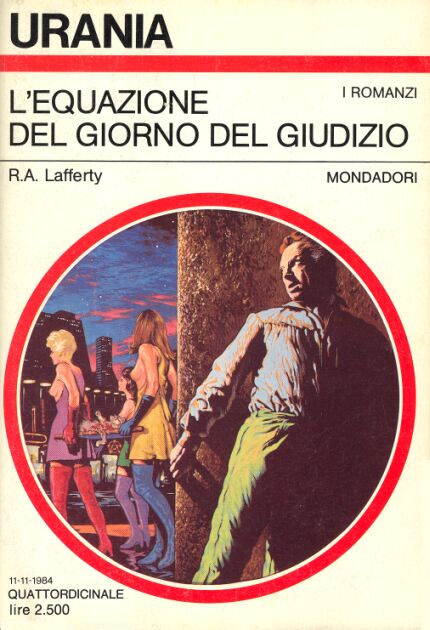
Raphael Aloisius Lafferty’s most interesting work, however, takes place on the distant planet Camiroi and is titled “Primary Education of the Camiroi” (1970). A group of Earth teachers visit to study the school system. Informality rules Camiroi (“any citizen of Camiroi competent to perform any task on the planet”), and to form a Parents-Teachers Association, the Earthlings must randomly select the first passers-by. Once the Association is formed, they tour the schools (private ones; there are only two public ones on the entire planet, but they are funded by the voluntary tithe paid by everyone), discovering the paradoxes of a teaching method that teaches people to read books slowly in order to master them completely, to build objects, to sing, to defame their classmates by practicing the art of rhetoric, to build objects ranging from spectacles to spaceships; discipline is maintained by lowering unruly children into a well or by hanging them (only one in a hundred, the Camiroi assure us; a local version of the famous Maoist saying, “Hit one to educate a hundred”). A school, they say, that is neither liberal (because liberalism presupposes servility) nor progressive (because progressivism is infantile). The increasingly stunned commission, after its orientation tour, offers us a priceless curriculum of skills and a series of recommendations:“Kidnap five Camiroi at random and set them up as pilot AGIs here on Earth, some constructive book burning, especially in the field of education, wisely hang some students who pretend to be ill.” Lafferty’s scathing irony hits the nail on the head with regard to education, starting from the idea that Camiroi’s school works because Camiroi’s world works (there are no playgrounds for children, since they have the entire planet to play on) and that education is entrusted to an educating community. It is, in short, the exact opposite of the planned education we are accustomed to. Which, for someone who calls himself Catholic and conservative, is not bad; it simply means that, in those metapolitical paradoxes that history allows, Lafferty represents, like Bradbury, the non-progressive liberal who nevertheless wants to free the individual from state subjugation, within a typically anarchic horizon. A right-wing anarchist, in short. — Claudio Asciuti, “Il mio amore è nato a Thelema (seconda parte),” Carmilla on line, February 9, 2005. Translated from the Italian. (carmillaonline.com)


