Building Bentley's Selenium Television

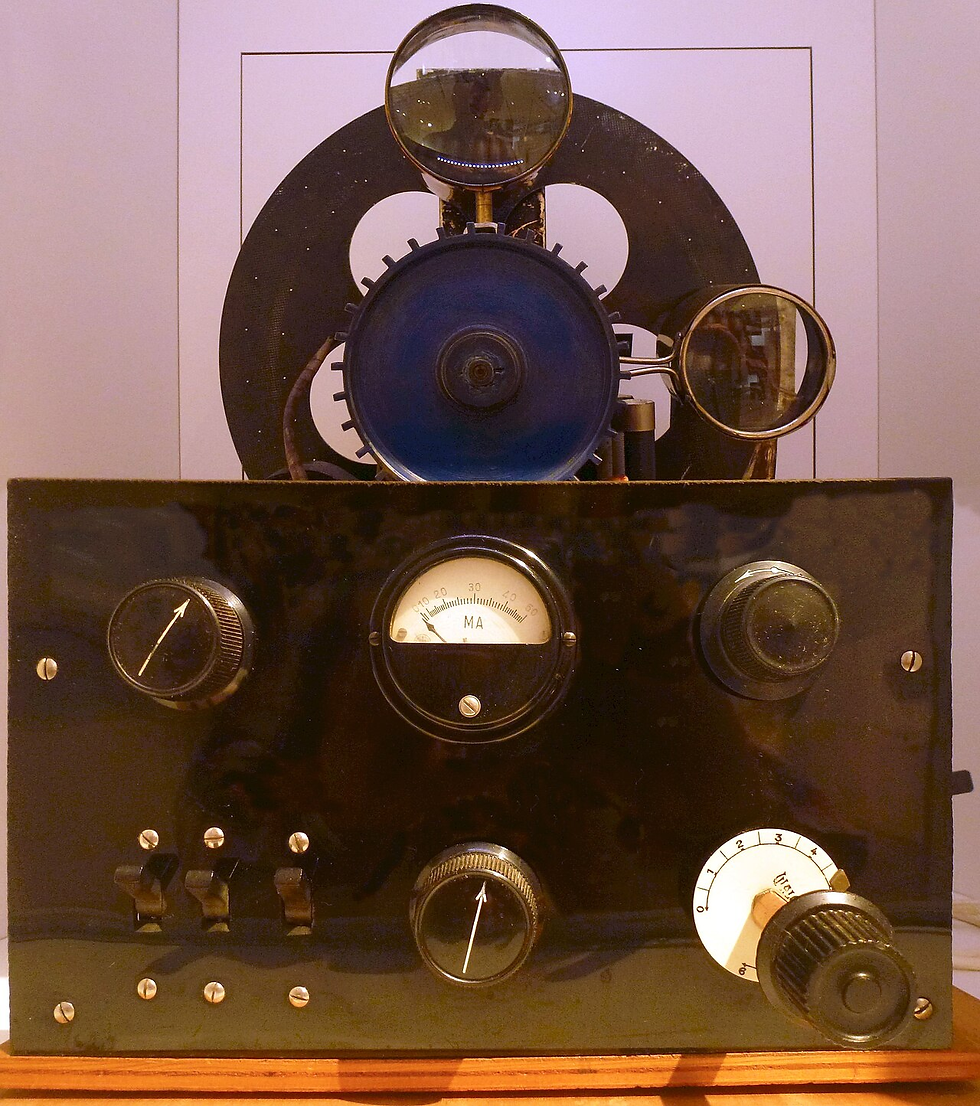
Even with Nipkow, his “spirally apertured rotating disc that provided, at both sending and receiving ends, a simple and effective method of image scanning”, I wish I had an illustration of it. I can't quite figure what the damned thing looked like. — Handwritten note
On November 18, 1992, Lafferty wrote to Patrice Duvic about his story “Selenium Ghosts of the Eighteen Seventies.” Some handwritten notes about Nipkow also survive. In the letter, he wrote, “Paul Nipkow got his patent for a ‘complete television system’ in Germany in 1884. And then we are in the realm of fact.” The patent took effect in 1884, though it was formally granted in January 1885.
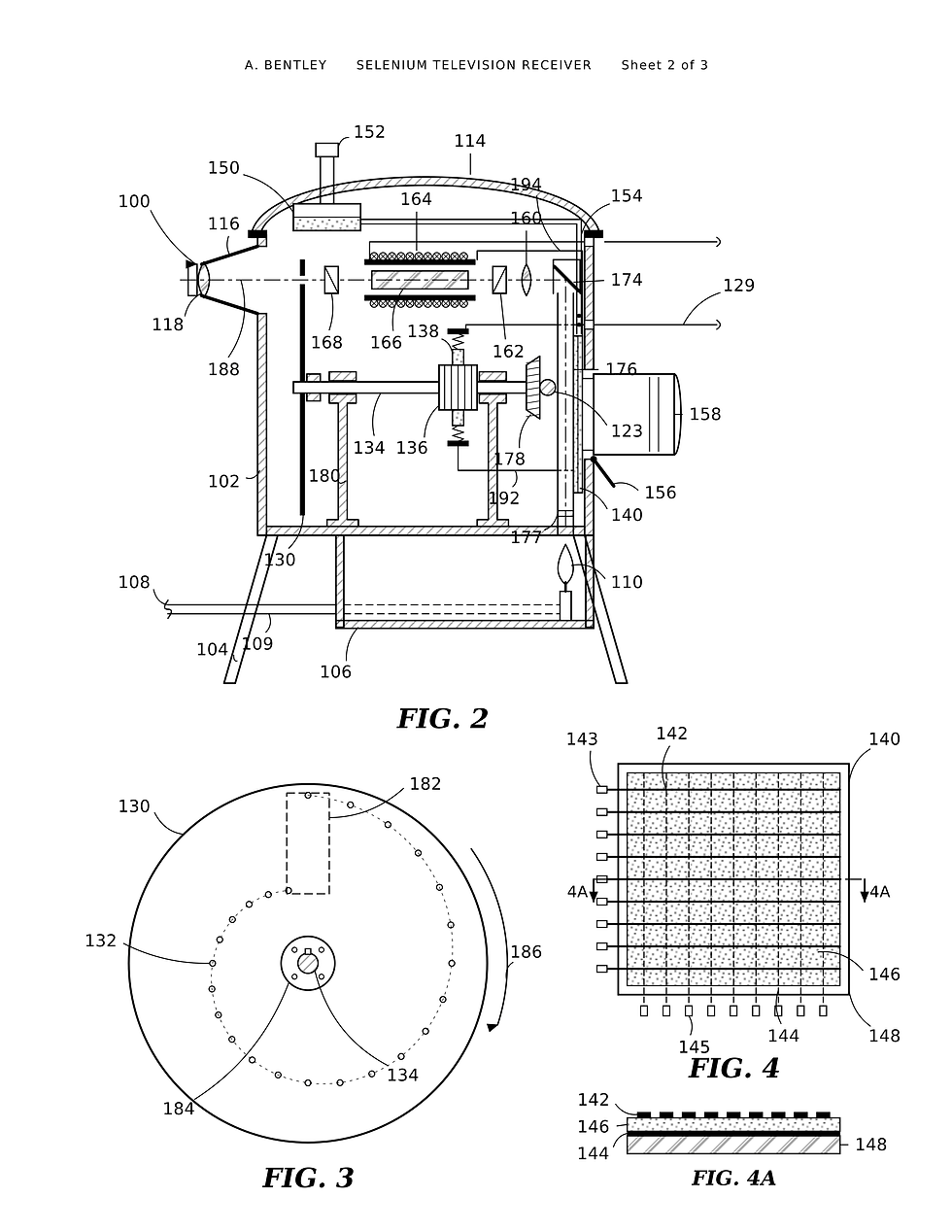
The proposed system centered on a Nipkow disk, a spinning disk with small holes arranged in a spiral. Each hole scans a different piece of an image. At the same time, the holes let light through to a sensor that converts changes in brightness into an electrical signal. At the receiving end, that signal varies the light passing through a matching disk that spins in step with the first. These successive scans recreate the image. Understandably, Lafferty had a hard time visualizing how it worked: “Even with Nipkow, his ‘spirally apertured rotating disc that provided, at both sending and receiving ends, a simple and effective method of image scanning’, I wish I had an illustration of it. I can’t quite figure what the damned thing looked like.”
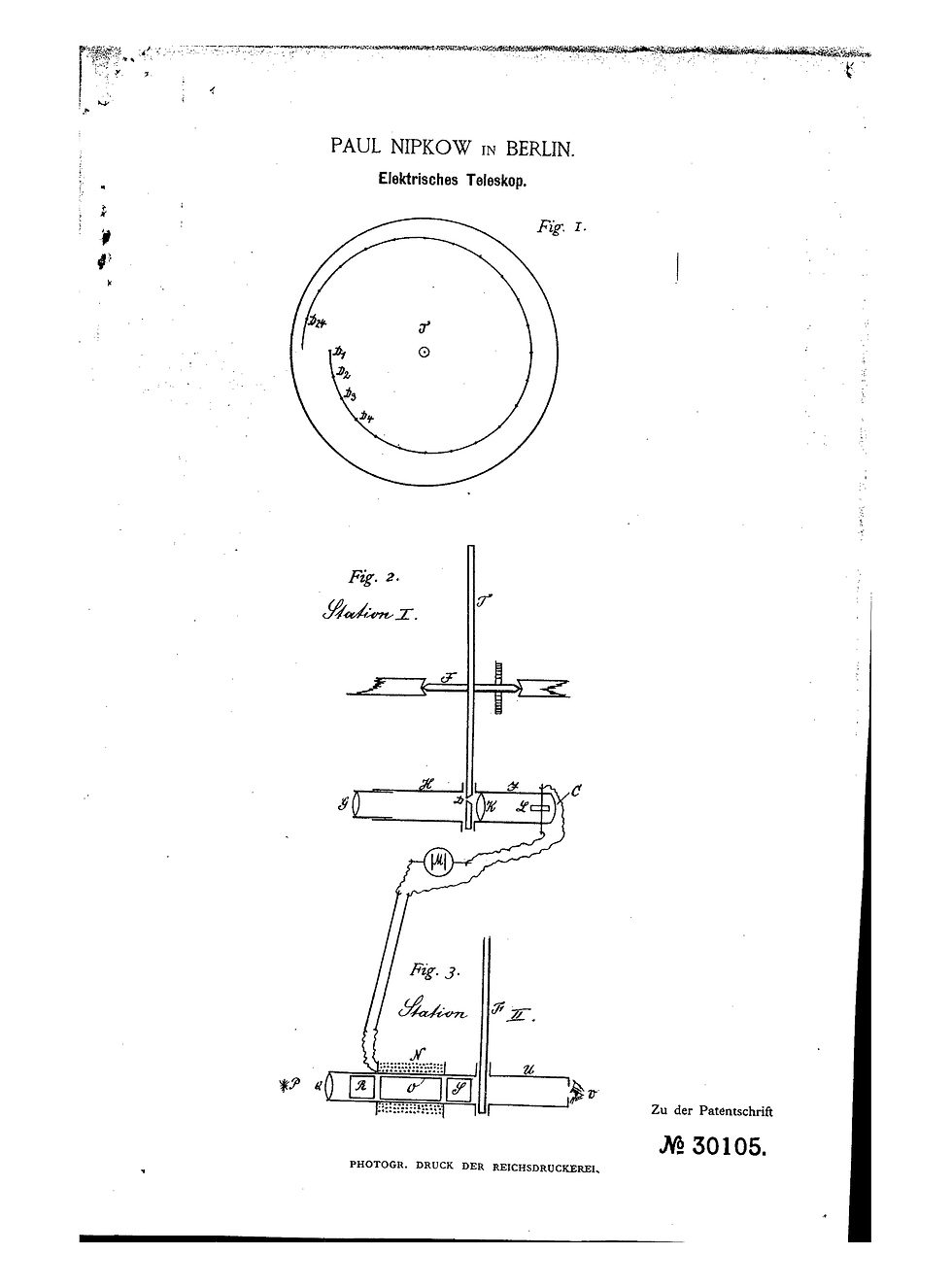
In "Selenium Ghosts," Lafferty makes one of his amazing leaps. He knew that in 1873, Willoughby Smith reported that selenium conducts electricity more readily when light falls on it, making changes in brightness detectable as electrical signals. In 1880, Alexander Graham Bell and Charles Sumner Tainter used this property in their photophone, which transmitted speech on a beam of light. The same property underlay Nipkow’s proposal for transmitting images. In a second letter to Duvic, dated January 4, 1993, Lafferty explained that he “located the ‘Wonderful World of Aurelian Bently’ two years earlier, in 1873, so there we are in the world of fiction. Only not quite, for it was in 1873 that the peculiar properties of Selenium, that its electrical conductivity varied with the amount of illumination, was discovered.”
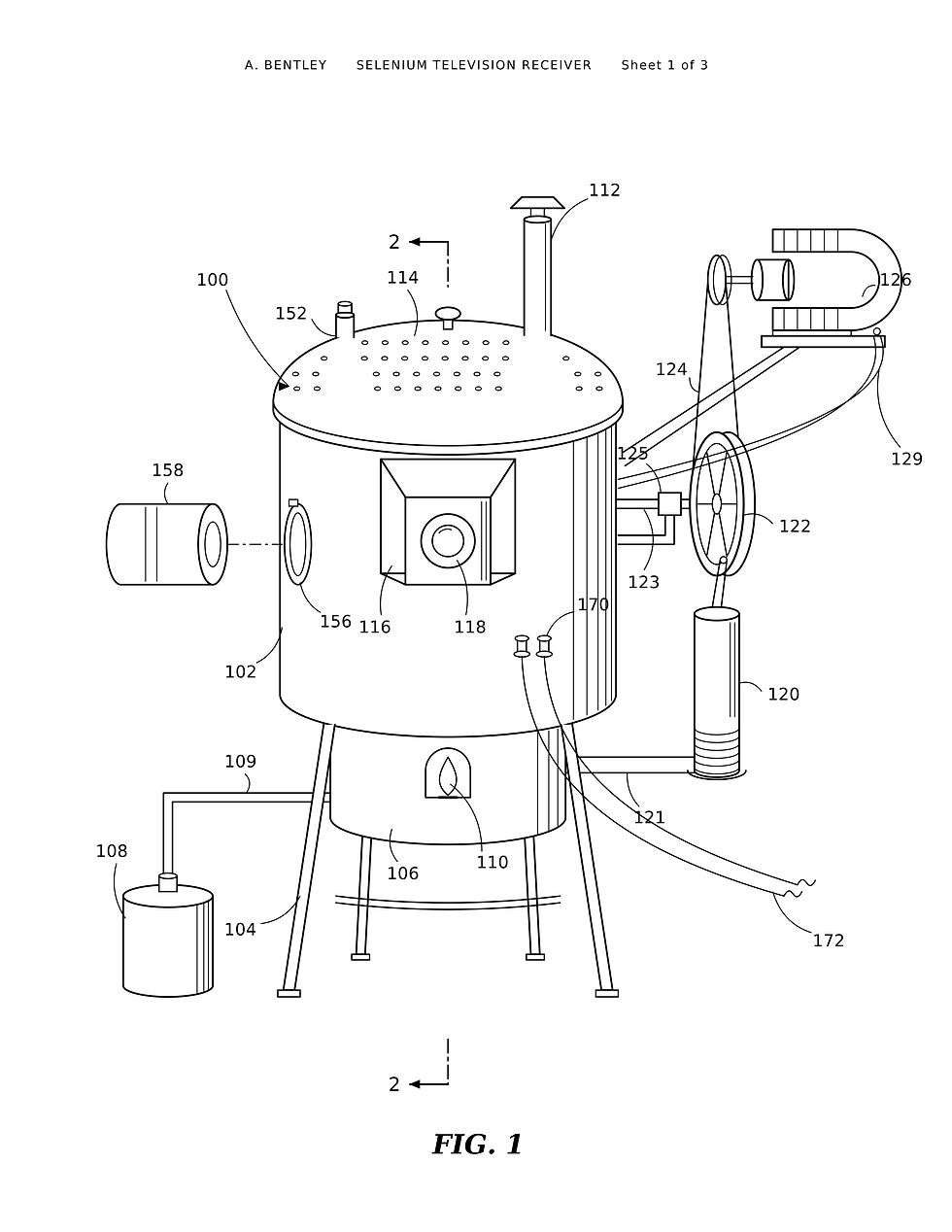
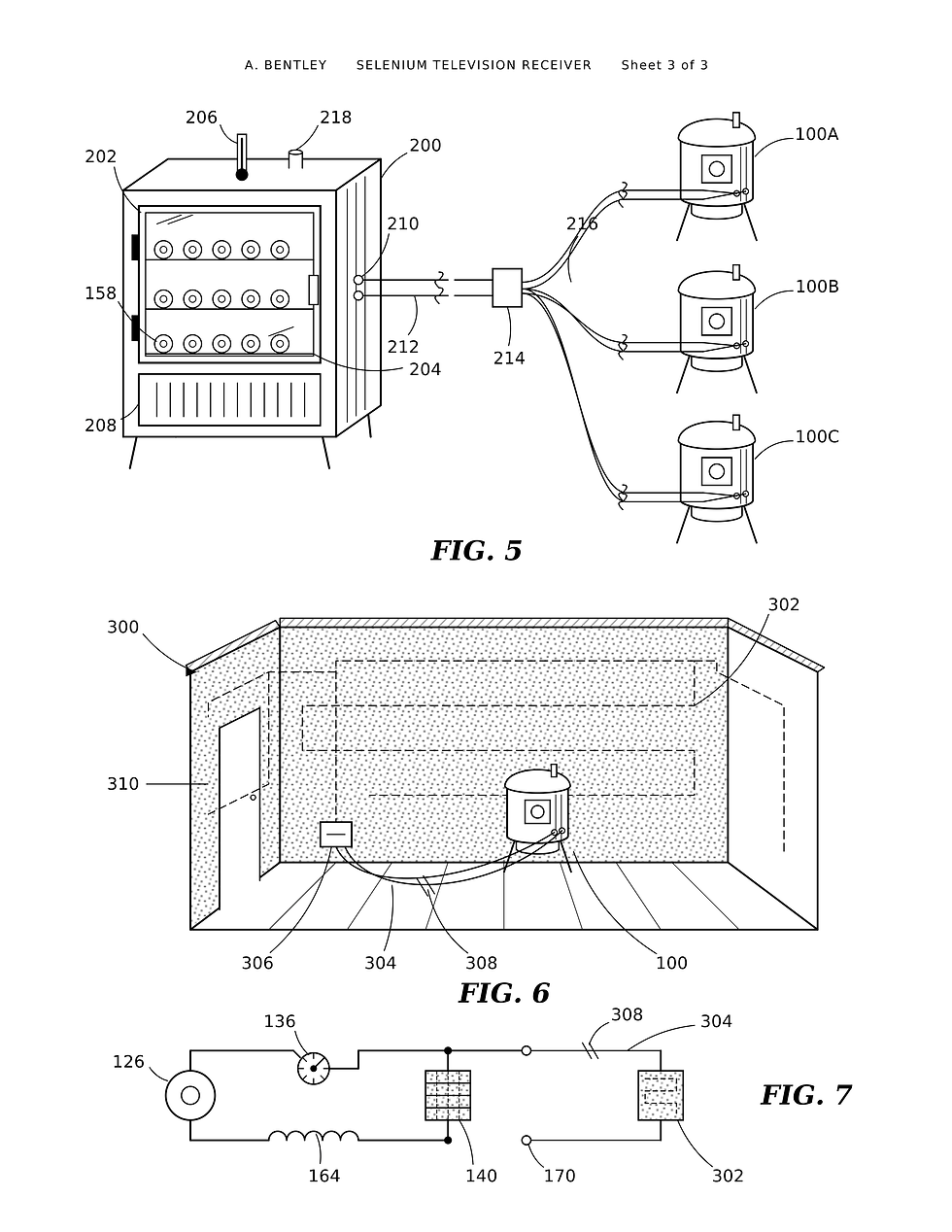
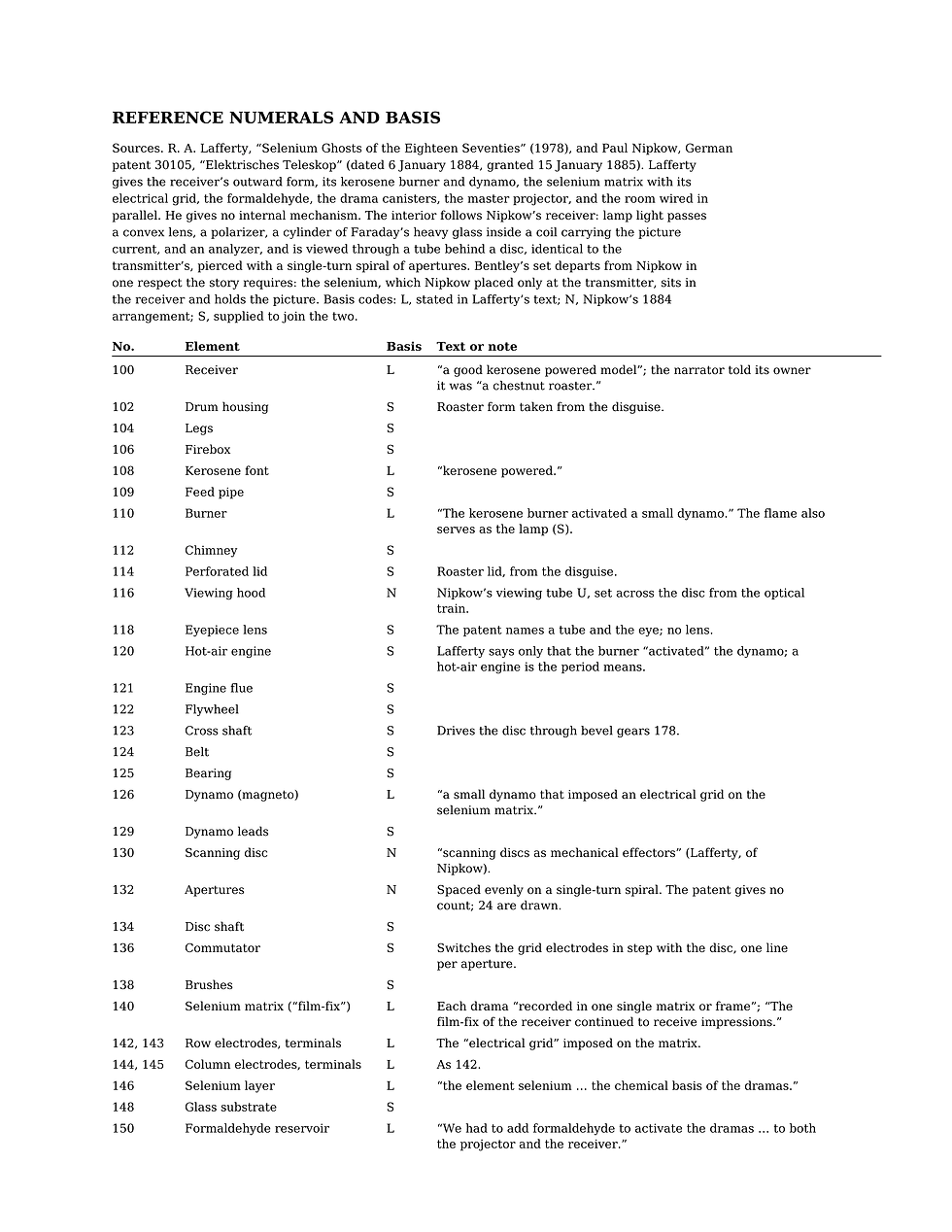
No scanning disk could produce what the receiver in Lafferty’s story reveals. The selenium “slow light” does the real magic. Lafferty’s wish for an illustration did make me curious, though. What would it look like to build Bentley’s device around a Nipkow disk? As for the story itself, I’d put it among his three best. Singular on every level.