“Barnaby's Clock" (1972/1973)

Updated: 18 hours ago

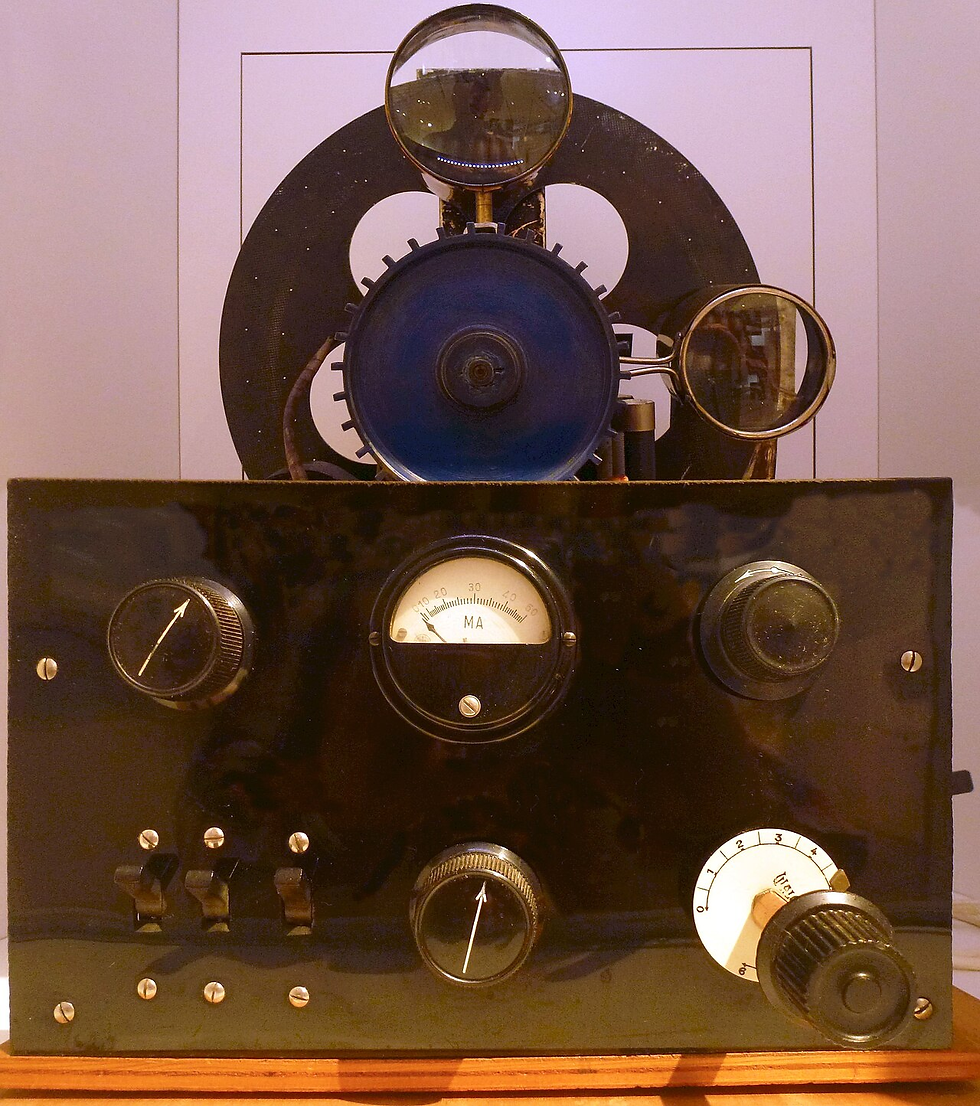
“Your machine can say how old a thing will be in its totality, but it can’t say how old a thing is right now?”— “Mostly it can do both. The present orientation can nearly always be coaxed out of it, though the clock considers the present of little importance. This is no gadgetry, people. It is positive science and it is wonderful.”
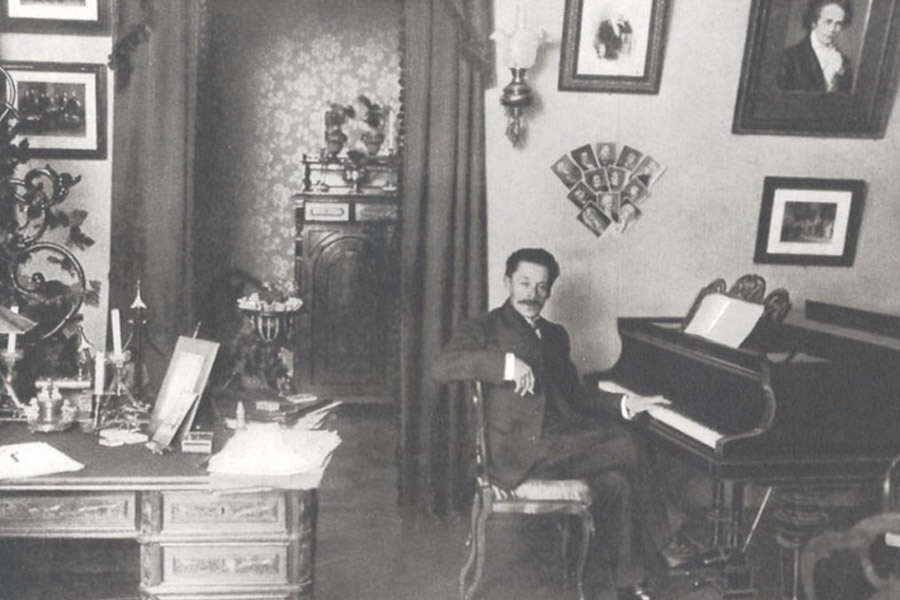
“The block has solved many problems of involution and devolution,” Barnaby said. “Naturally the clock does not accept evolution, or has any intelligent person in [?] accepted it in a lifetime. This is more than quibbling over names. It’s the rejection of a one-dimension thing that was wrong-minded in its single dimension . . . . Historically, Darwin was not the first scientist who propounded sequence evolution. He was, thankfully, the last. But the involution of the world is the widest and most textured of all fields, except the full[?] field that contains it. Ya, the clock will solve [hundreds/thousands/?] of problems here.” — Handwritten draft pages for "Barnaby’s Clock"
Advanced Lafferty. Summary starts in black, if you want nuts and bolts.
“Barnaby’s Clock” is the first appearance of the beloved Austro. Lafferty usually threw away the scaffolding for these stories. This time we are lucky to have some surviving traces of his process. They tell us a few interesting things about The Men Who Knew Everything (TMWKE ) sequence. For instance, they tell us about why Lafferty created Austro, and about how “Barnaby’s Clock” relates to the other stories in the sequence inspired by Watkin.
This is especially relevant to the four-part demonstration of Green/Life: “The Ungodly Mice of Doctor Drakos,” “The Two-Headed Lion of Cris Benedetti,” “The Hellacious Rocket of Harry O’Donovan,” and “The Wooly World of Barnaby Sheen.” All four parts of that single set are related to “Barnaby’s Clock,” which deals with violet/the practical sciences in Watkin’s scheme. “Barnaby’s Clock” rejects theistic evolution; the four-part story set is about life, both physical and spiritual. Evolution is an explanation for the history of life on earth, if not abiogenesis. Lafferty despises it, just as he castigated abiogenesis in an essay.
He wrote,
Make a pile of chemicals roughly equivalent to the chemical elements and compounds of a human body. Let the pile set overnight. And I bet you all the money I have that it won't have turned into a living human being by morning. Persons such as Isaac Asimov and Carl Sagan say that tens of thousands (maybe tens of millions) of planets will fulfill the conditions for the support of life. And then they take the rather deceptive step from the ‘possibility of life’ to the ‘inevitability of life’ by such connivance as would shame a crooked gambler. They posit towering numbers of ‘civilizations’ on those ‘possibility-of-life planets’, at least half of them to be more advanced than the Civilization of Earth and Humankind. But there is a strong element of Advocacy Science in this. There is a great and powerful lobby advocating the existence of great numbers of superior civilizations. One reason for this is that the secular-liberal-agnostic-relativistic faction of scientists cannot allow the uniqueness of anything, not of Earth, not of Life, certainly not of Human Life, most certainly not of existing Human Civilization. To allow the uniqueness of any of these things, they would have to cease to be secular-liberal-agnostic-relativistic persons. And the shock of changing their style would kill all of them. Science Fiction also has a vested interest in there being a multiplicity of inhabited worlds and civilizations. That is one of the small number of things that Science Fiction is about. But Science Fiction is, after all, only a fiction.
The issues this post tracks are convoluted, so I will begin with some context, move to a summary, start teasing apart what is going on, and circle back to context. This is really for those who want to puzzle out what is going on as Lafferty creates his second great story sequence. The goal is always a deeper, richer Lafferty that people can argue with.
The best way I know to start is with a few details bearing on how The Men Who Knew Everything came to be. Lafferty finished the first story of what later became the sequence on January 23, 1970, when he completed his Valentinian horror story “The All-At-Once Man.” One will hear it said at times that there are the early TMWKE stories and then there are the Austro stories. That misses the architecture.
The first story belongs to another very important level of the later fictional universe of In a Green Tree involving Helen and John, but it also stands as an odd precursor to the TMWKE sequence itself. It could exist on its own. I read it that way. When Lafferty fits the story into the sequence, note that he places it next to YELLOW and calls it HIGH-BRASS: PSEUDO-CHROMATIC. Now look at the compositional dates of the stories. You will see what happened. He returned to the story world of John Penandrew and “The All-At-Once Man” a year later when he decided to create the Watkin sequence we know as TMWKE, which ultimately outgrew its Watkin conception and became the Austro stories we love.

An aside. Although the TMWKE stories were mostly worked out before In a Green Tree and have been obviously far more visible, I think it is better to see them as a displacement of the Green Tree materials, which came together in 1978, about which more in a moment. That is counterintuitive in terms of reception and composition but not in terms of artistic shaping. Lafferty reconfigures the earlier materials. That will be part of understanding the Whole Lafferty. If retro-causality exists anywhere (it does in Origen’s metaphysics of prophecy), it does in art.
The next point is that Lafferty did not have a story sequence with Austro in mind when he wrote “Mud Violet,” nor did he have Austro in mind when he started “Barnaby’s Clock.” This is similar to Epiktistes’s absence from the first Institute stories. Again, Lafferty had a good story with the John Penandrew piece. More than that. It is a weird little masterpiece. He likes his characters.
Beginning with the second TMWKE story, “Mud Violet,” however, John Penandrew is out of the picture. Lafferty is going to write a real sequence, and he is going to be ambitious. We will learn much more about John Penandrew and his doomed younger brother, David, in Green Tree, as Lafferty develops that material when he returns to the character at the center of the first of his TMWKE stories. John Penandrew will be of major importance in Green Tree, his wife being one of Lafferty’s four great female characters (in my view).
But for now, Lafferty begins writing a different kind of story inspired by Watkin’s 1932 meditation on Catholic ontology. Thus, the first story in the actual sequence (as conceived) is the second written one, “Mud Violet,” which Lafferty finished a year later, on January 2, 1971. In it, he mentions Watkin. It begins at the low end of Watkin’s spectrum with what Lafferty calls hylicon (from the Greek hyle), which is mud violet. He planned to attack the colors/angstroms in order, and he started doing so. It will be systematic until it isn’t. That is something Lafferty readers should discuss. Again, the dates.
As an exercise, let’s trace the line from “Mud Violet” and “Barnaby’s Clock” to In a Green Tree and back again to “Barnaby’s Clock” and “Mud Violet.” There are many ways to do this, but I want to focus on Barnaby and Loretta Sheen first. It is the simplest, high-reward route. Let’s go for the cheap points first.
In his notes, Lafferty has the following story idea:
Seven young teenagers die violently, one by one but in a short period of time. Most are out of the families of the Fundamental Barrenness. [?] they have become their own manifestations. The [?] are narrated from the Poltergeist point of view. They come to, they come to their own point of view. They are a blind-end humor, they are trapped, they are a blind-end and cannot grow up except one or two of them, and can [?] [?] go in even more horrible direction.
Some speculation. This note is the basis for Edmund Weakfish’s wicked class on participation psychology ("Mud Violet"), in which Loretta Sheen and her classmates die by suicide. That results in Loretta becoming the sawdust-filled doll and the poltergeist girl Mary Mondo's manifestation. Lafferty seems to fiddle with the "one or two of them," and the terrible direction becomes Mary and Loretta. There is also the specter of Catholic suicide here. At this point, Lafferty has not yet decided what he will do with Loretta and Mary. Each character will become intriguing.
When Lafferty goes on next to write “Barnaby’s Clock,” he has moved from the spooky nature of hylicon (again, inspired by Watkin and suicide) to practical violet. Loretta Sheen and Mary Mondo are now present and in their doll and ghost forms as we know them. Importantly, Barnaby is not married. He seems never to have been. His friends don’t even remember him having a wife.
When Lafferty later writes the fourth part of Green Tree, he has worked out the full story about this on that other fictional plane. In that work, Barnaby is married to the brilliant and beautiful Monica MacLish. Both of them are fully part of the complex Green Tree itself. But we are told a secret about that perfect-seeming married couple, the ingenious Sheens. Readers of the Austro stories do not yet know this unless they have read the unpublished material.
Barnaby Sheen is not, in fact, Loretta’s biological father. She is the product of an affair, for he was cuckolded, and he knows it. Yet he loves Loretta and continues to be cuckolded. Loretta knows it. Her suicide and Barnaby’s refusal to believe she really killed herself (because of the manipulation of Edmund Weakfish, the Putty Dwarf) is the tragedy of Barnaby’s life. And in one of the sadder moments in Lafferty, one that greatly deepens the TMWKE sequence, we read the following exchange between Barnaby and Loretta:
“Mama gets up awful early,” ‘doll’ said to Barnaby Sheen in her strained and rasping voice. “I look down through the window. A friend comes to mama while it’s still dark, but it begins to get light when he leaves. They lie on that biggest stone bench with the red padding on it. I talk too much. It hurts me.” “Then neither of us will talk of it further, Loretta,” Barnaby said. “It hurts me too.”
With all this in mind, we can see the large Barnaby-Loretta circle. It runs from the first of the real sequenced stories in TMWKE, “Mud Violet,” to the last completed volume of Green Tree. At that point, Barney’s full arc comes into view on two levels of stereoscopic fictional reality, TMWKE and Green Tree. In the late seventies, Lafferty used the TMWKE materials of the early seventies to build the very deep world of In a Green Tree. At the beginning, though, there was no Green Tree, but its possibility was latent: after all, Lafferty had written himself in as Laff.
Lafferty seems to have been both fascinated by Watkin’s idea of color and irritated by Watkin’s views on what we would now call theistic evolution, which Lafferty of course rejected. To see what Watkin believes, one needs to have read the Green chapter in Watkin, which I will include at the end of this post, and one needs to be familiar with what Lafferty is doing with LIFE in the four Green stories that Centipede Press has broken apart, because they aren’t relying on Lafferty academics.
From my reading, Lafferty’s irritation with Watkin is apparent in the first of the real-sequence stories, “Mud Violet,” which I will explain when I cover that difficult story. It is not just that Lafferty is color-coding stories, as if he were playing a game that illustrates Watkin. Lafferty didn’t need colors to gin up story concepts. He argues with Watkin. Why think this? We have evidence.
In the disordered early fragments of the story that introduce us to Austro, there is no Austro. Barnaby's clock looks to be just a chronometer, some kind of clock that disproves evolution. Understanding that, and what happens in the big circle with Austro and Barnaby-Loretta, will be the focus of the rest of this post.
“Barnaby’s Clock” begins with two false starts that place the reader in a position to think about the nature of time, the age of various earthly objects, and the unreliability of scientific clocks:
“The Lead/Alpha-Particle-Ratio clock can be trusted only as far as its zircon crystals,” the cosmologist went on, “and I sure wouldn't burn my back on a bunch of zircon crystals. None of the RadioCarbon clocks is any good, and the Carbon-Fourteen clock is the worst of them all. You must always multiply its results by two or five or ten or even fifty to get a scientifically acceptable answer and I feel guilty every time I do that.”
It then shifts to the central plot, which takes place in Barnaby Sheen's home. Barnaby gathers the other TMWKE into his dynamic study—which contains the sawdust-filled doll host of his daughter Loretta and resident spirit Mary Mondo—to announce his creation of a "magic clock" that can determine the age and essence of anything in the world. Over his first evening, the TMWKE heard strange vocalizations that sounded like "Carrock." They come from a newly partitioned room (Barney can move the walls of his home), which Barnaby attributes to a sensitive, smart new servant who is struggling to learn how to prepare drinks.
We then skip forward to the next evening. Barnaby hosts a larger demonstration of the clock for an audience. It includes several eminent scientists, with a fun callback to "Boomer Flats." (Barnaby has planned the night carefully to coincide with Willy McGilly being out of town.) Participants drop items such as coins, rocks, and fossils into the machine's slot. Questions are asked. A rigged typewriter prints out their questions as well as the answers, ages, and origins of the objects. The presentation falls into chaos when the clock starts assigning implausibly recent dates to prehistoric fossils. This culminates in the claim that the Australopithecus tooth is only fifty-five years old:
“Fifty-five years since the inanimation or death of the creature,” it typed, “and seventy-seven years since its birth.” And all those great visitors howled like maniacs at that poor machine of a clock. But the “Carrock, carrock” in the next room had turned into a chortle. “Any fool would know that it has to be over a million years old,” August Angstrom swore furiously. “Clock, do you even know what it is?”
The audience is outraged when the machine types that this ancient species (here Lafferty is still calling it a species, not a genus) never went extinct. It just restricted itself to a small homeland in Ethiopia. Some of the people present dismiss the demonstration as a fraudulent joke and angrily storm out.
Once only Barnaby’s inner circle remains, the nature of the evening's events comes out. Barnaby confesses that the magic clock was an elaborate hoax. He was working the typewriter with a concealed remote control in his palm, though he claims the theatrical exercise will help him invent a functional version in the future. The marvel of the gathering is then introduced. It is, of course, our Austro, a living, juvenile Australopithecus, this time wearing a white jacket when he comes from the partitioned room:
It, he, came into the room then. He had on a neat white bartender's jacket. He had a pad and pencil in his hands. He was grinning, he was hairy, he was simian in some rakish way, he was manlike or at least boylike in a more subtle way, and he was eager to be of service.
He proves himself to be a willing and capable bartender. Important clues about Austro's role are dropped, ones that will be used in the stories that follow.
The earliest handwritten drafts of “Barnaby’s Clock” do not make Austro the literal/metaphorical clock. Lafferty seems not yet to have known what he wanted to do with the story; he knew only that there would be a clock, and what is especially interesting is that he abandoned the explicit anti-evolution angle as he lightened the story. Originally, there was no Austro, but there is an exchange absent from the published text in which the clock is asked the age of Consciousness. It answers that all markers of the present fall outside, or before, the frame of its shape. This implies that consciousness is either at its very beginning or not yet fully realized, which ties into Lafferty's theme of mutational jump and spiritual leap.
Another question in manuscript material concerns the age and form of the Amnesia: the condition of radical unknowing that the manuscripts present as humanity’s constitutive situation and as the deepest subject the clock could address. This is, of course, Lafferty’s great amnesia theme. It is already here, orienting the first of the sequenced TMWKE stories, and it becomes the great theme of In a Green Tree, both as an act of historical recovery and as a history of cultural amnesia.
Then there is Darwinian evolution. We know how much Lafferty hated Darwin from the dozens of times he tells us this. Consider how he damns Darwin in “Claudius and Charles.” Lafferty’s frustration with Darwin is what led him to make Austro the clock. In the manuscript, Barnaby says that sequential evolution “tried to set the whole of the many-dimensions thing onto a single time-line,” and that “a long fish does not turn into a shark, any more than one brother turns into another.” This is the core of the story: the idea that linear biological succession misrepresents nature, which is instead lateral, simultaneous, and multidimensional.
That diagnosis is built into the clock. This is why the story spends so much time on evolutionary dating methods, each of which assumes a single measurable axis and differs only in the isotope ratio it relies on. In the published story, the Australopithecus tooth goes into the slot. The clock returns fifty-five years since death and seventy-seven years since birth. The investigators storm out because a living memory Australopithecus ruins the narrative of human history around which evolutionary theory is organized.
So here is a question: what is Barnaby’s whole clock? It looks like three things to me: a con game, a person, Austro, and an ontological claim. All come together in Barnaby's big speech:
"It analyzes shape and texture and so arrives at essence, Cris,” Barnaby said with the sudden seriousness of a prophet or con-man. “The texture of anything in the world or out of it must depend on the size and shape and total age of that thing. This applies to a physical thing, to a social-group thing, to a tenuous syndrome or behaviorism, to an historical complex . . . ”
Barnaby’s entire speech seems to say something like this: the texture of any entity (its readable density and grain) is a function of its size, shape, and total age. Because the relation is necessary rather than contingent, it is invertible. Given a precise reading of texture, the clock can reveal the age, but there is a rub: it can do so only by conveying the essence inseparable from that age.
This applies across ontological categories without restriction: physical objects, social formations, behavioral patterns, historical complexes, persons, and the electrostatic beings that arise at the intersections of persons are all available. The one defined exclusion is the deadly arts and sciences. Lafferty says they lack sufficient texture to be read because (I take it) there is nothing in them to read.
The clock has one real limitation (really its enabling condition): it considers the present moment of little importance and has difficulty locating it within a thing's total texture (because its total texture is the one moment). The clock can say how old a thing will be in its totality more readily than it can say where in that totality the thing currently stands ("Mostly it can do both. The present orientation can nearly always be coaxed out of it, though the clock considers the present of little importance").
Someone on East of Laughter said the story says Barnaby is in his mid-thirties, but we know he is in his fifties, so that is a mystery. It isn't a mystery. Lafferty's joke is that this proves the clock is right by making it look like it's wrong. The clock just hasn't been coaxed out about Barnaby's present age.
A vitalist corollary follows from the weird causal model Lafferty sets up. If texture is a necessary product of size, shape, and total age, then a thing genuinely alive in its field (that is, fully extended into its duration, fully realized in its form) will produce richer, denser, more readable texture than a thing that persists without living. The clock's readings are therefore not neutral measurements. Barnaby's wristwatch will not run when he is angry or feeling bad—"It will not run on bad time." Negative being disrupts it.
At the end of the story, Austro enters the TMWKE sequence, and it changes as profoundly as it does when Epikt pops up in the Institute stories. In “Barnaby’s Clock,” Barnaby has been putting on a show, yet the appearance of Austro confirms everything the theatrical demonstration could not prove. On the surface, the magic clock show was a hoax, which is why Barnaby did not want Willy McGilly present. McGilly can flense any hoax. Barnaby was working the typewriter by concealed remote, then looking at the specimens on the conveyor belt and dialing in the answers himself. Yet the demonstration was built around a real principle, and that is what the Australopithecus tooth shows.
When the tooth goes into the slot, the clock returns fifty-five years since death and seventy-seven years since birth. The audience storms out because this means that the species is still present, in the “one moment,” as it were. That would destroy the evolutionary narrative around which the field is organized. It is the scientific story that “Barnaby’s Clock” was conceived to attack.
In the manuscript notes, Lafferty writes, “‘Your clock should be able to settle the question of evolution,’ said Dr. Drakos.” The clock is built against being taken in. Sequential evolution misrepresents supranature, and the clock reads nature from above as it actually is. It is more than one-dimensional, as Lafferty puts it. Austro walking out of the partitioned room in a white jacket, willing and ready to mix a Cuba Libre for Laff, is the proof of some sort of surprising temporal coinherence.
Why did Lafferty change his mind about making the attack on evolution so overt and cut it? Probably for just that reason: there is no ambiguity about where Lafferty stands in the handwritten material, and he was not yet ready to go this far in his fiction. I have been told by a convention-goer that Lafferty was not reluctant to share his views on evolution at cons. I think Lafferty created Austro in part because Watkin irritated and fascinated him. We owe Watkin some gratitude.
In The Bow in the Cloud, Watkin argues for theistic evolution by trying to reconcile the “phenomenal” mechanisms of science with the “noumenal” reality of metaphysics. He argues that evolution and what looks like natural selection is the creative activity of God viewed “from below.” He also points to a teleological hierarchy of being in which the “progressive rationalisation and spiritualisation of matter” is driven by the Creator Spiritus, rather than by blind clockwork forces alone. With some of that, Lafferty probably agreed.
Where he did not agree was in treating emergent evolution and divine creation as two aspects of the same fact. Watkin holds that biological complexities act as a “lens” reflecting “Divine Light,” allowing for the appearance of novel forms, vegetative, sentient, and rational, whenever matter is sufficiently prepared. Elements of that do ring true to Lafferty, as we see at the end of Past Master and with Epikt. The problem was Darwin and how much ground could be ceded.
"Barnaby's Clock" has been thought of as being pretty slight, but it is a keystone for Lafferty’s second major story sequence, both in its own development and in its relation to the wider displacements of the Whole Lafferty. To pull Austro into the Barnaby-Loretta circle, Loretta dies in "Mud Violet," Austro next becomes Barnaby's clock in “Barnaby’s Clock,” and Barnaby's clock gives Loretta peace through time in Incidents of Travel in Flatland:
It was the always cheerful Austro, boy magician and exchange genius, on the morning of the day on which he left for Africa from his two years residence in the neighborhood, who gave “doll” and that scrap of somebody's personality that lingered in her, her peace and her rest. “You go to sleep now, ‘doll’, and continue to sleep,” he told her. “Oh? For how long?” she asked. “Oh, for a thousand years,” he said.“That won't seem very long if I'm asleep, will it,” she said. “It hurts me to talk.” “No, not long at all,” Austro assured her.
Note that the Austro stories span a two-year period. The dates again. “Long” is subordinate to greater texture on Barnaby’s clock.