Alligator Extension

Updated: Nov 10
Not long ago, someone I respect asked how to use the blog: what to read, where to begin.
Look, I don’t know.
This hobby thing now has more than 500 posts, plus other resources, totaling about 700,000 words. It took me a while to learn how to write about Lafferty. Part of that meant dropping academic cant and giving up the urge to write pretty, two habits that annoyed me in other people’s writing.
To cover all the territory, the prose would need to be piston-like because Lafferty is such a big place. I’ve approached him through a series of tangent lines that should, in principle, define a curve. Given the nature of his work, I don’t see how else to do it than beat the bounds.
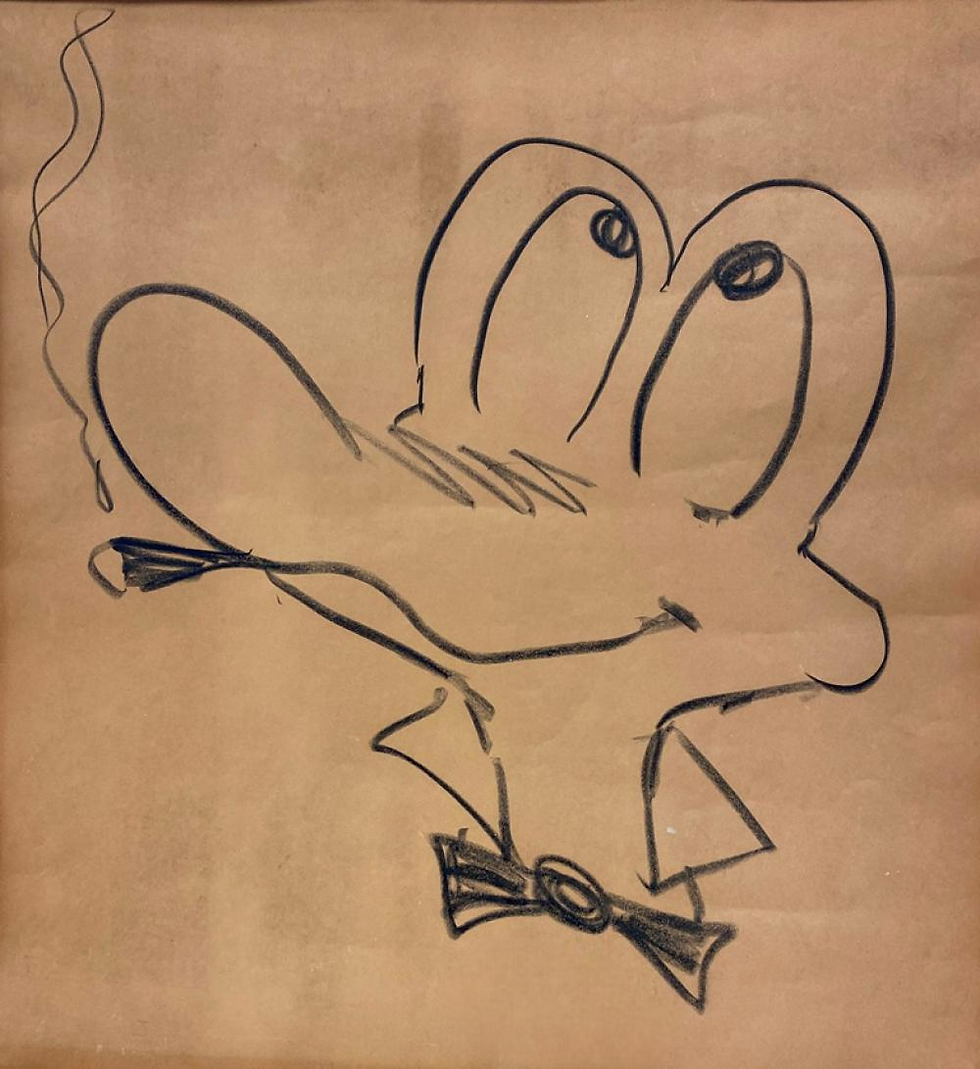
To answer my acquaintance’s question, I created this alligator extension (an LLM/RAG tool). I’ll probably use it more than anyone else. In theory, it will also let me move on to what I want to do next: shorter posts on very niche topics. It should draw on all those pieces, keep them from getting buried, and help bring out how they contribute to the larger view I’m trying to articulate.
It will also point people to the Tulsa archive and the works’ composition and publication histories. My idiosyncratic interpretations are one thing; the archival record is another. I want the tool to keep that distinction clear.
The tool needs to be a lot smarter (it will be; I’m already up to version 65), but the plan is to make the alligator extension a guide to Lafferty’s writing through my posts on Arrive at Easterwine. You can ask about a story, a character, a passage, an argument on the blog, or something else in Lafferty. It should draw on material from across the blog, including the archival research, to answer your question and show connections within his work.
Its answers will reflect my interpretations, which are open to question. I’ve tried to build it so that it puts pressure on my ideas. But it won’t be me. All readers should pop the switchblade and cut the face. AI still lacks those killer instincts. Nonetheless, the aim, as always, is to give someone a lot smarter than me something to think with or argue against. I want that reader to have more fun with Lafferty and help keep him alive.
Start with a suggested question or write your own. For a focused answer, plug in the title of a work or paste a passage. Ask follow-up questions: “Give me an example.” “What supports that reading?” “What’s another way to understand it?” “Where is the argument weak?”
A while back, I turned off blog comments because I needed some quiet to work out my views about Lafferty. I didn’t want some half-assed sound-off disrupting my reading.
Now that my reading is mostly complete, I’m turning comments back on. Anyone who wants to go off on a post can. I know what I think. If someone points out a real mistake, I’ll be Johnny on the spot to fix it. Very little ego here, but a lot of piss and vinegar.
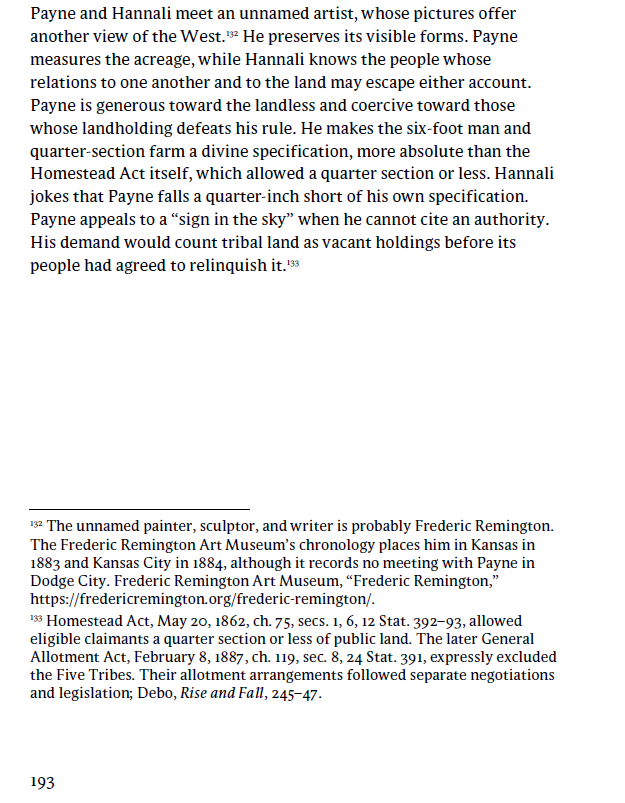
Unrelatedly, I’m attaching the latest version of my Okla Hannali notes. I’ll be rereading the novel in the next few weeks, so I’ve tightened them up. It has a chapter-by-chapter commentary, a detailed plot outline, a chronology, family and character tables, a glossary, etc.
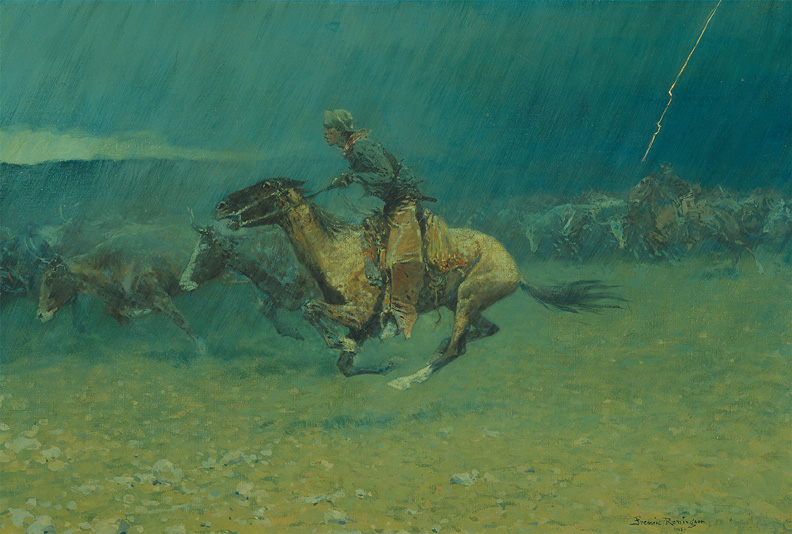
This is the kind of Easter egg that keeps me endlessly interested in what the cranky old man from Tulsa was doing. Did you know Hannali met Frederic Remington?
Opening map
United States. Department of the Interior. Commission to the Five Civilized Tribes. Map of Choctaw Nation, Indian Territory, Showing Progress of Appraisement for Fiscal Year Ending June 30th, 1900. Map. n.d.
Bibliography
Abel, Annie Heloise. The American Indian as Participant in the Civil War. Cleveland: Arthur H. Clark Company, 1919.
Abel, Annie Heloise. The American Indian as Slaveholder and Secessionist: An Omitted Chapter in the Diplomatic History of the Southern Confederacy. Cleveland: Arthur H. Clark Company, 1915.
Abel, Annie Heloise. The American Indian under Reconstruction. Cleveland: Arthur H. Clark Company, 1925.
Aquinas, Thomas. Summa theologiae. Translated by the Fathers of the English Dominican Province. 2nd rev. ed. 1920. Electronic text, New Advent.
Aristotle. Physics. Translated by R. P. Hardie and R. K. Gaye. Book 6. Internet Classics Archive.
Bacon, Francis. The Essays or Counsels Civil and Moral. London: George Routledge and Sons, 1884. Columbia University Libraries.
Bible. Douay-Rheims Version, Challoner revision. Electronic texts, Douay-Rheims Bible Online and Christian Classics Ethereal Library.
Bible. King James Version. Electronic texts, Bible Gateway and King James Bible Online.
Bible. New American Bible, Revised Edition. Electronic text, United States Conference of Catholic Bishops. Genesis 2–3, 6–9, and 11.
Borges, Jorge Luis. “The Other Death.” Translated by Norman Thomas di Giovanni in collaboration with the author. New Yorker, November 2, 1968.
Bruce, Michael L. “Our Best Men Are Fast Leaving Us: The Life and Times of Robert M. Jones.” Chronicles of Oklahoma 66, no. 3 (Fall 1988): 294–305.
Byington, Cyrus. A Dictionary of the Choctaw Language. Edited by John R. Swanton and Henry S. Halbert. Bureau of American Ethnology Bulletin 46. Washington, DC: Government Printing Office, 1915.
Carroll, Lewis. Alice’s Adventures in Wonderland. 1865. Chap. 6, “Pig and Pepper.” Project Gutenberg.
Catholic Church. Catechism of the Catholic Church. Vatican website.
Catholic Church. Rituale Romanum Pauli V pontificis maximi jussu editum et a Benedicto XIV auctum et castigatum. Rome: Typis S. Congregationis de Propaganda Fide, 1847.
Catlin, George. Illustrations of the Manners, Customs, & Condition of the North American Indians. Vol. 2. London: Chatto & Windus, 1876. Project Gutenberg transcription.
Chesterton, G. K. A Short History of England. London: Chatto & Windus, 1917.
Chittenden, L. E. Recollections of President Lincoln and His Administration. New York: Harper & Brothers, 1891.
Choctaw Nation of Oklahoma. “The Choctaw Alphabet.” Accessed September 29, 2026.
Choctaw Nation of Oklahoma. “History and Development of Choctaw Foods.” Iti Fabvssa, February 1, 2010.
Confederate States of America. The Statutes at Large of the Provisional Government of the Confederate States of America. Edited by James M. Matthews. Richmond: R. M. Smith, 1864. “Treaties with Indian Nations.” University of Nebraska–Lincoln transcription and facsimiles.
Congregation of the Mission, Western Province. “About Us.” Section “Vincentian History.” Accessed September 29, 2026.
Cunningham, Frank. General Stand Watie’s Confederate Indians. San Antonio: Naylor, 1959. Transcribed by Bill Thayer.
Cushman, H. B. History of the Choctaw, Chickasaw, and Natchez Indians. Greenville, TX: Headlight Printing House, 1899.
Cushman, H. B. History of the Choctaw, Chickasaw, and Natchez Indians. Edited and abridged by Angie Debo. Introduction by Clara Sue Kidwell. Norman: University of Oklahoma Press, 1999.
Debo, Angie. The Rise and Fall of the Choctaw Republic. 2nd ed., 3rd printing. Norman: University of Oklahoma Press, 1972.
Dickens, Charles. American Notes for General Circulation. London: Chapman & Hall, 1913. Originally published 1842.
Drago, Harry Sinclair. Wild, Woolly, and Wicked: The History of the Kansas Cow Towns and the Texas Cattle Trade. 1960.
Eddings, Anna. “Opothleyahola.” In Encyclopedia of Oklahoma History and Culture. Oklahoma Historical Society, January 15, 2010.
Foreman, Grant. The Five Civilized Tribes. Introductory note by John R. Swanton. 1934. Reprint, Norman: University of Oklahoma Press, 1966.
Foreman, Grant. Indian Removal: The Emigration of the Five Civilized Tribes of Indians. New ed., 2nd printing. Norman: University of Oklahoma Press, 1956.
Frederic Remington Art Museum. “Frederic Remington.” “A Chronology,” entries for 1883–85. Accessed September 28, 2026.
Gateway to Oklahoma History. “The Choctaw Intelligencer (Doaksville, Choctaw Nation [Okla.]) 1850–1852.” Title catalog. University of North Texas Libraries and Oklahoma Historical Society.
Gilcrease Museum/Helmerich Center for American Research. Catalog record for “Communication from Three Delaware Chiefs to Grand Council of Indian Nations on North Fork of Canadian River,” June 9, 1861. John Ross Papers, MC.1954.185, item 4026.1273-.1, folder 1106.
Glidden, Joseph F. “Improvement in Wire-Fences.” U.S. Patent 157,124, issued November 24, 1874.
Goode, William H. Outposts of Zion, with Limnings of Mission Life. Cincinnati: Poe & Hitchcock, 1864. Internet Archive facsimile.
Harrison, Benjamin. Proclamation 288, “Opening to Settlement Certain Lands in the Indian Territory.” March 23, 1889. The American Presidency Project.
Historic Congressional Cemetery. American Indian Tour. Revised March 11, 2022.
Huston, James L. “Quantrill’s Raiders.” In Encyclopedia of Oklahoma History and Culture. Oklahoma Historical Society, January 15, 2010.
“An Indian Presbytery.” New-York Evangelist, October 23, 1851, 170, col. 1.
Ivey, Darren L., comp. Trails to the West: An Annotated Guide to Selected Sources on Kansas, the Great Plains, and the American West. Barton Community College, June 30, 2022.
Jackson, Andrew. “Special Message.” February 22, 1831. American Presidency Project.
Knott, Elizabeth. “Alphabet Origins: From Kipling to Sinai.” Metropolitan Museum of Art, December 22, 2014.
Lafferty, R. A. Okla Hannali. Foreword by Geary Hobson. Norman: University of Oklahoma Press, 1991.
“Late from Florida.” Maryland Gazette (Annapolis), April 13, 1837, col. 4. Maryland State Archives.
Laws of the Colonial and State Governments, Relating to Indians and Indian Affairs, from 1633 to 1831, Inclusive: With an Appendix. Washington City: Thompson and Homans, 1832.
Le Petit, Mathurin. Letter to Father d’Avaugour, July 12, 1730. In The Jesuit Relations and Allied Documents, edited by Reuben Gold Thwaites, vol. 68. Cleveland: Burrows Brothers, 1899.
Lincoln, Abraham. “House Divided” speech. Springfield, IL, June 16, 1858. Transcript, Lincoln Home National Historic Site, National Park Service.
McCoy, Isaac. History of Baptist Indian Missions: Embracing Remarks on the Former and Present Condition of the Aboriginal Tribes; Their Settlement within the Indian Territory, and Their Future Prospects. Washington: William M. Morrison, 1840.
McReynolds, Edwin C. Oklahoma: A History of the Sooner State. 4th printing, revised. Norman: University of Oklahoma Press, 1964.
Mathews, John Joseph. The Osages: Children of the Middle Waters. Norman: University of Oklahoma Press, 1961.
Meserve, John Bartlett. “Chief Isparhecher.” Chronicles of Oklahoma 10, no. 1 (1932): 51–76.
Michalicka, John. “First Catholic Church in Indian Territory, 1872: St. Patrick’s Church at Atoka.” Chronicles of Oklahoma 50, no. 4 (Winter 1972–73): 479–85.
Minnesota Historical Society. “The US-Dakota War of 1862.” Historic Fort Snelling. Accessed September 28, 2026.
Monaghan, Jay. Civil War on the Western Border, 1854–1865. Boston: Little, Brown, 1955.
Morgan, Speer, and Greg Michalson. Introduction to “A Man Between Nations: The Diary of Peter Pitchlynn,” by Peter Pitchlynn. Missouri Review 14, no. 3 (1991): 55–63.
National Park Service. “Mandan.” Knife River Indian Villages National Historic Site. Updated June 22, 2020.
North Carolina Division of State Historic Sites and Properties. “April 26, 1865 Agreement.” Bennett Place. Accessed September 28, 2026.
Ottawa Tribe of Oklahoma. “Notable Moments in Ottawa Tribal History.” Accessed September 28, 2026.
Pate, James P. “Pitchlynn, Peter Perkins.” In Encyclopedia of Oklahoma History and Culture. Oklahoma Historical Society, January 15, 2010.
Polk, James K. Message to Congress. May 11, 1846. Avalon Project, Yale Law School.
Rein, Chris. “The U.S. Army, Indian Agency, and the Path to Assimilation: The First Indian Home Guards in the American Civil War.” Kansas History 36, no. 1 (Spring 2013): 2–21.
Rice University. “A Day in History.” The Papers of Jefferson Davis.
Smithsonian American Art Museum. “Há-tchoo-túc-knee, Snapping Turtle, a Half-Breed.” Collection record for George Catlin, 1834. Accession 1985.66.296.
South Carolina. “Declaration of the Immediate Causes Which Induce and Justify the Secession of South Carolina from the Federal Union.” December 24, 1860. Avalon Project, Yale Law School.
Swanton, John R. Early History of the Creek Indians and Their Neighbors. Bureau of American Ethnology Bulletin 73. Washington, DC: Government Printing Office, 1922.
Swanton, John R. Source Material for the Social and Ceremonial Life of the Choctaw Indians. Foreword by Kenneth H. Carleton. 1931. Reprint, Tuscaloosa: University of Alabama Press, 2001.
Texas, Republic of. Constitution of the Republic of Texas. 1836. General Provisions, sec. 9. Tarlton Law Library, University of Texas School of Law.
Texas State Library and Archives Commission. “The End of the Ordeal.” Part 2. Last modified March 3, 2016.
Texas State Library and Archives Commission. “Texas Makes Its Choice.” In “Part 5: The Final Showdown.” Last modified December 2, 2014.
United States. An Act Providing for the Prosecution of the Existing War between the United States and the Republic of Mexico. May 13, 1846, ch. 16, 9 Stat. 9.
United States. General Allotment Act. February 8, 1887, ch. 119, 24 Stat. 388–91.
United States. Homestead Act. May 20, 1862, ch. 75, 12 Stat. 392–93.
United States. Joint Resolution for the Admission of the State of Texas into the Union. December 29, 1845. 9 Stat. 108. Texas State Library and Archives Commission.
United States. Trade and Intercourse Act. March 30, 1802, ch. 13, 2 Stat. 139–46.
United States and Choctaw Nation. Treaty of Dancing Rabbit Creek, September 27, 1830. 7 Stat. 333. Tribal Treaties Database, Oklahoma State University.
United States and Choctaw Nation. Treaty of Doak’s Stand, October 18, 1820. 7 Stat. 210. Tribal Treaties Database, Oklahoma State University.
United States and Choctaw Nation. Treaty of January 20, 1825. 7 Stat. 234. Tribal Treaties Database, Oklahoma State University.
United States and Choctaw Nation. Treaty of October 24, 1816. 7 Stat. 152. Tribal Treaties Database, Oklahoma State University.
United States, Choctaw Nation, and Chickasaw Nation. Treaty of April 28, 1866. 14 Stat. 769. Ratified Indian Treaties, Oklahoma State University Libraries.
United States. Congress. Senate. Correspondence on the Subject of the Emigration of Indians. Senate Document 512, 23d Congress, 1st session. Vol. 3.
United States. Department of State. Office of the Historian. “Acquisition of Florida: Treaty of Adams-Onis (1819) and Transcontinental Treaty (1821).”
United States. Office of Indian Affairs. Report of the Commissioner of Indian Affairs for the Year 1865. Washington, DC: Government Printing Office, 1865.
United States. War Department. The War of the Rebellion: A Compilation of the Official Records of the Union and Confederate Armies. Series 1, vol. 1. Washington, DC: Government Printing Office, 1880. Ohio State University, eHistory.
United States. War Department. The War of the Rebellion: A Compilation of the Official Records of the Union and Confederate Armies. Series 1, vol. 8. Washington, DC: Government Printing Office, 1883.
Verlaine, Paul. Poèmes saturniens. Paris: Alphonse Lemerre, 1866. “Caprices,” no. 1, “Femme et Chatte.”
Williams, Chad. “Round Mountain, Battle of.” In Encyclopedia of Oklahoma History and Culture. Oklahoma Historical Society, January 15, 2010.
Wright, Muriel H. “Colonel Cooper’s Civil War Report on the Battle of Round Mountain.” Chronicles of Oklahoma 39, no. 4 (Winter 1961–62): 352–97.


