Abandoned Novel: Dynamatized Today (1980)

Updated: 6 hours ago

You make one comment though that is as totally backwards as anything can be in this world: “There is very little real tragedy in life because so few people have the emotional capacity to live them . . .” But the fellahin people who make up ninety-seven percent of mankind do have almost total emotional capacity for real tragedy, and that is the ambient they live in. It is only the effete semi-literates (there are no true literates) who have become innoculated against tragedy (mostly by entertaining themselves with toy tragedy) who have no emotional capacity for real experience at all. They get their innoculations from Norse or German operatic mythology or from Greek or off-Broadway drama or from Soap Opera, and so they leave off being valid people. Really, it is only the under-people who have any valid feelings at all. The toy and weightless "elite" do not have real feelings or real encounters. This has always been known as one of the facts of the world. — Letter to Sheryl Smith, February 10, 1981
Yes, the brilliant University of Chicago grad Sheryl Smith put it that way to RAL: real tragedy is a rare experience, reserved for the emotionally profound. Lafferty could not have disagreed more. In the passage above from their correspondence, he says, au contraire: the intellectual elite are emotionally stunted ones. And he uses one of his more pointedly idiosyncratic terms, one of his weird words, fellahin, to describe the common ninety-seven percent that includes people who read R. A. Lafferty. The masses, he says, live in a constant state of authentic tragedy and possess the only “valid feelings.” The elites, by contrast, inoculate themselves against suffering through what he calls “toy tragedy,” the manufactured sorrow of art. That is just the rich man and the logic of the Cross.
Lafferty greatly enjoyed Smith as a person, but this was a mild rebuke, especially given the past the two shared, which included the verse tragedies Smith was mailing him in the 1970s, one of which was her version of the Prometheus myth. She could not have known that he had recently written his own fictional response to Prometheus, which he abandoned not terribly long before their February 10th exchange.
Fellahin is a magical and overdetermined word that recurs in Lafferty, so it is worth pausing over it. It moves about in his work. The year before Lafferty responded to Smith, he began and then abandoned the novel in which the concept would have played a central role. It was to be his Prometheus novel. That may explain why it was on his mind when Smith came in so high-toned.
The title of the abandoned novel was never settled, but it would most likely have been called So We Be Dynamized Today. Other working titles include Waking Giants and, briefly, To Change the Mind and Change Me, perhaps. Six complete chapters survive, along with several projected chapter titles for unwritten chapters, plus some notes. The fragment runs to dozens of pages and is fascinating in its scope. The Fellahin enter the narrative through a line of speculative biology. Lafferty describes its opposite, the ruling class, this way:
The persons of the society were superciliously intelligent or brainy, which is to say that they were well-brained in the regions above the eyebrows. But below this stratum, they had an airiness or pleasant emptiness in their heads. They hadn't that “cellar-full of brains” such as more primordial persons sometimes do have.
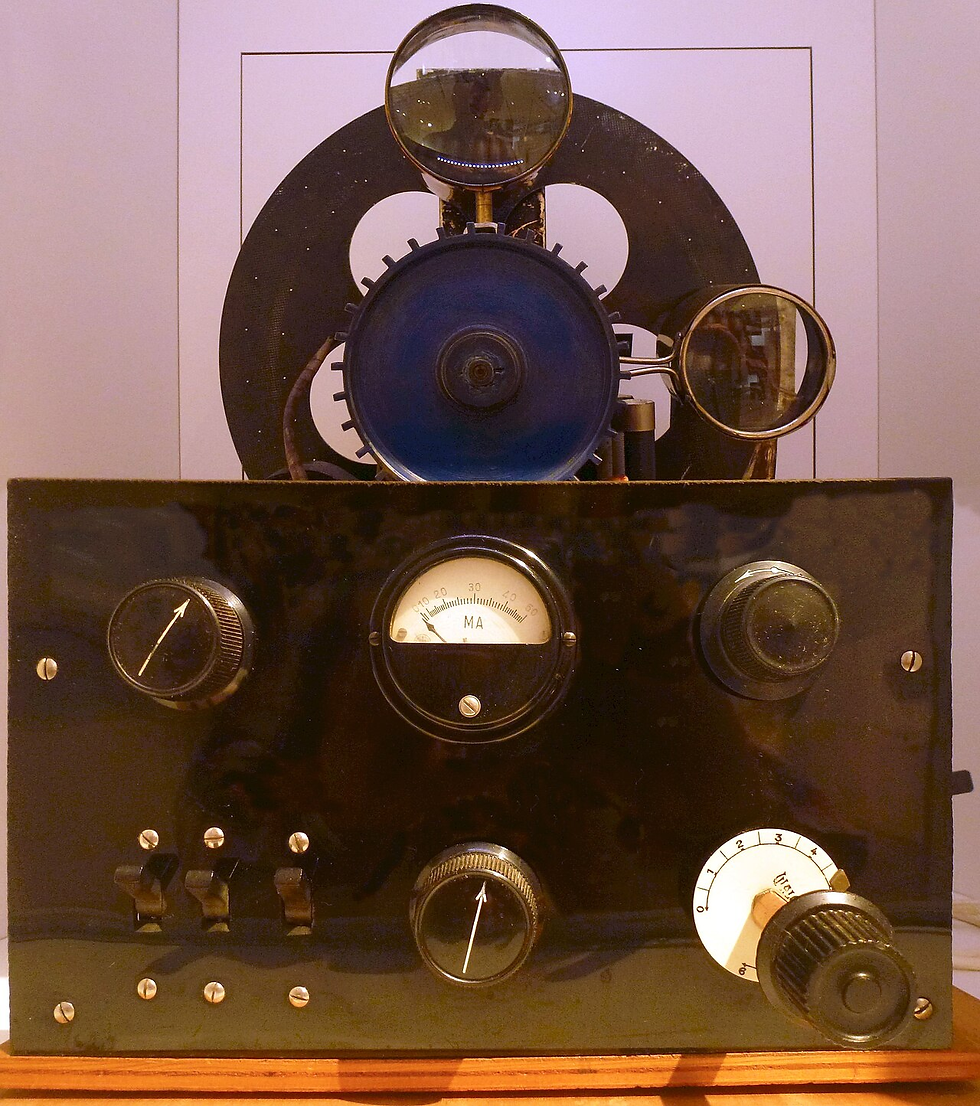
To fill it out a bit, a vacuum-cleaner salesman named John Truc arrives at the last house on the last street in town carrying a device that can awaken the full potential of any human mind. The Catholic Dichoso family has thirteen members, though the mother can only ever count twelve, and she buys the device for twenty dollars. Twelve Dichosos are transformed into explosive geniuses overnight; the thirteenth, Valentine, is excluded for lack of a dollar. The mother, Rita, explains why one child is always left out:
All mothers of large families always forget one of their kids every time they go through the list of them. That's the general theory. And the special theory is that they always forget the same one because it's handier that way.
As the awakening spreads to thousands, a secret society of chromosomally superior elites mobilizes to kill Truc and destroy his invention, recognizing it as a threat to the biological caste system that has kept common humanity asleep for millennia. Truc, meanwhile, is dying. He breaks out in snow each time he uses the device, his liver is being eaten by vultures, and he is bound by invisible adamantine chains. He is Prometheus, he is also a "skimpy little runt" paying with his body for the fire he carries. Truc describes his own state like this:
Because, Oh this is difficult to say, Valentine — because I am already illuminated, because I am already explosive, because I am already at my final flowering and fruiting. I am unchained, I am awakened, and this is what I am. It's dismal.
The manuscript breaks off after six chapters with an anguished buzzard (revealed to be a previous failed fire-bringer, a brilliant touch) crashing a party, a 700-year-old queen murdered by her own faction, and Valentine beginning to inherit her husband's Promethean burden. There are some clues about where it might have been going as a novel.
From this outline, one can see that So We Be Dynamized Today imagines cyclical, parasitic symbiosis between the Fellahin (the baseline human majority, imagined as a dormant reservoir of explosive intelligent energy) and the Elite, a mutant sub-species with two additional chromosomes. Lafferty describes the cycle like this:
The fellahin and the elites are thus interlinked and symbiotic species, the elites rising from the slumbering powerhouses of the commonality . . . The elites do not decline back into the commonality or fellahin (for the movement is always in the other direction). They do not fall back into that fructifying 'ocean' of people and potential people. Instead of that, they wither away and die.

But where does the Fellahin fixation come from? The fluent in German Lafferty almost certainly takes it from Oswald Spengler. But he reverses Spengler’s emphasis. Spengler condescends to the Fellahin as an exhausted remnant, a historical type. Lafferty treats them as the most important part of humanity. Within it is the saving remnant, the locus of what is in Coscuin the Green Revolution. The Fellahin are the “sleeping giants,” a suppressed reservoir of power.
That historiographic reversal connects to Lafferty’s law of intellectual constancy and to his idea of occult compensation. In the abandoned novel, the Elite cannot integrate with the masses. Hybridization produces sterile mules. The Elite, therefore, depend on a parasitic cycle in which they arise from the Fellahin and are eventually replaced. The result is a trap: the awakening of the Fellahin entails the death of the Elite. That equilibrium is threatened by technological disruptions that could allow the masses to awaken without requiring the ruling class’s extinction.
It’s a shame Lafferty didn’t finish the book; for anyone who casts a wary eye on elites—left and right alike—its political suggestiveness is obvious.